 How-to
How to Start Indoor Golf Practice for Beginners
Last Updated: November 8, 2026
Quick Summary
Indoor golf practice for beginners starts with the clubs you already own, flat-soled shoes, and a simple plan: warm up, drill one skill, then hit full swings. Keep each session to 45 to 60 minutes and practice two or three times a week.
- Bring a beginner set with a driver, a few irons, a wedge, and a putter.
- Flat-soled sneakers or golf shoes give a stable base on the turf mat.
- Split sessions into 10 minutes warm-up, 20 minutes drill, 20 minutes full swing, 10 minutes review.
- Track carry distance, club path, and face angle at impact in your first month.
- Run the four-week progression two or three times per week to build a repeatable swing.
Table of Contents
- What You Need Before Your First Indoor Golf Practice Session
- Building an Indoor Golf Practice Routine for Beginners
- How Long Should a Beginner Golf Practice Session Length Be?
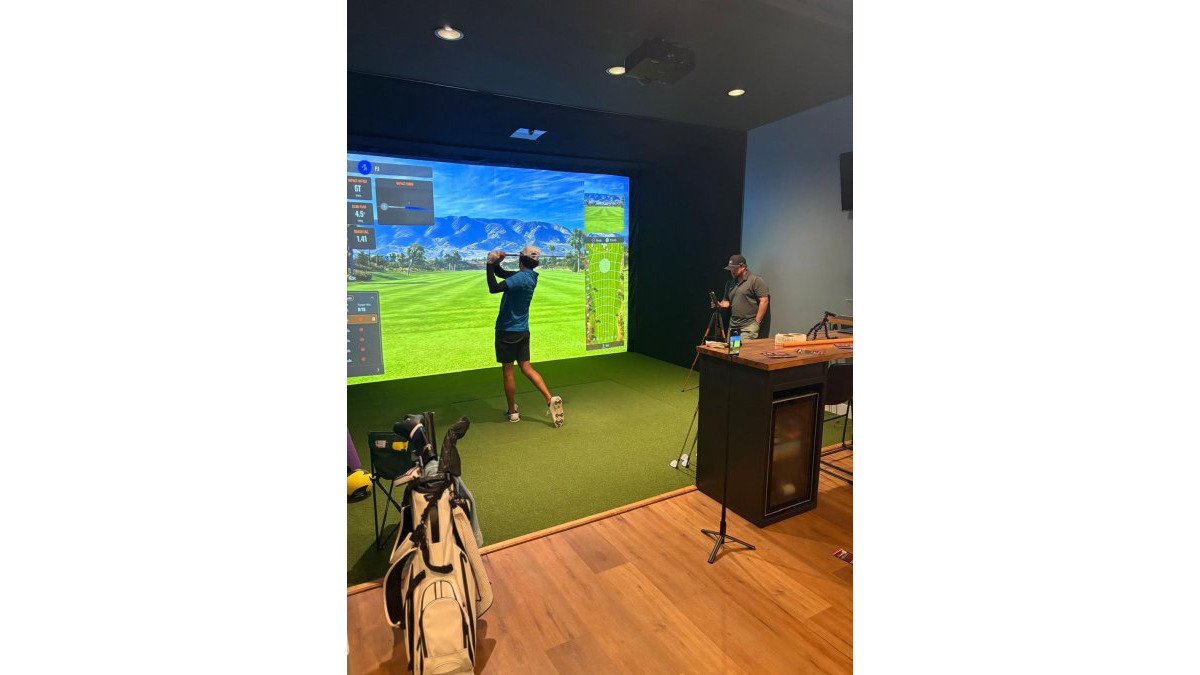
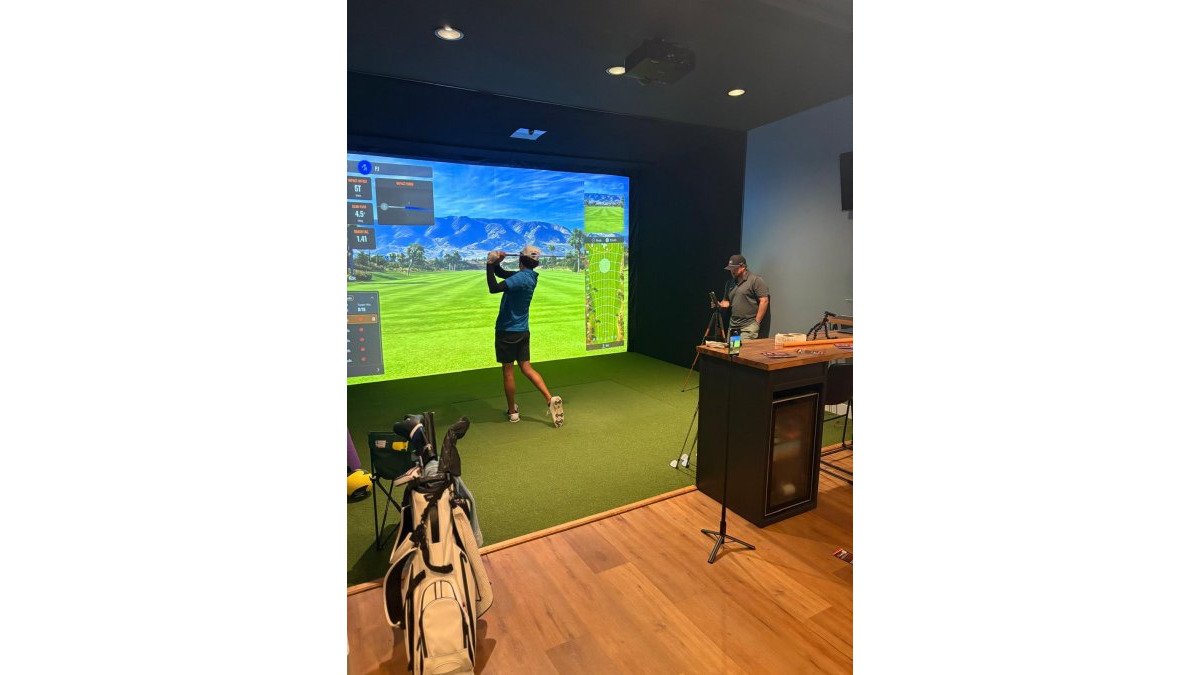
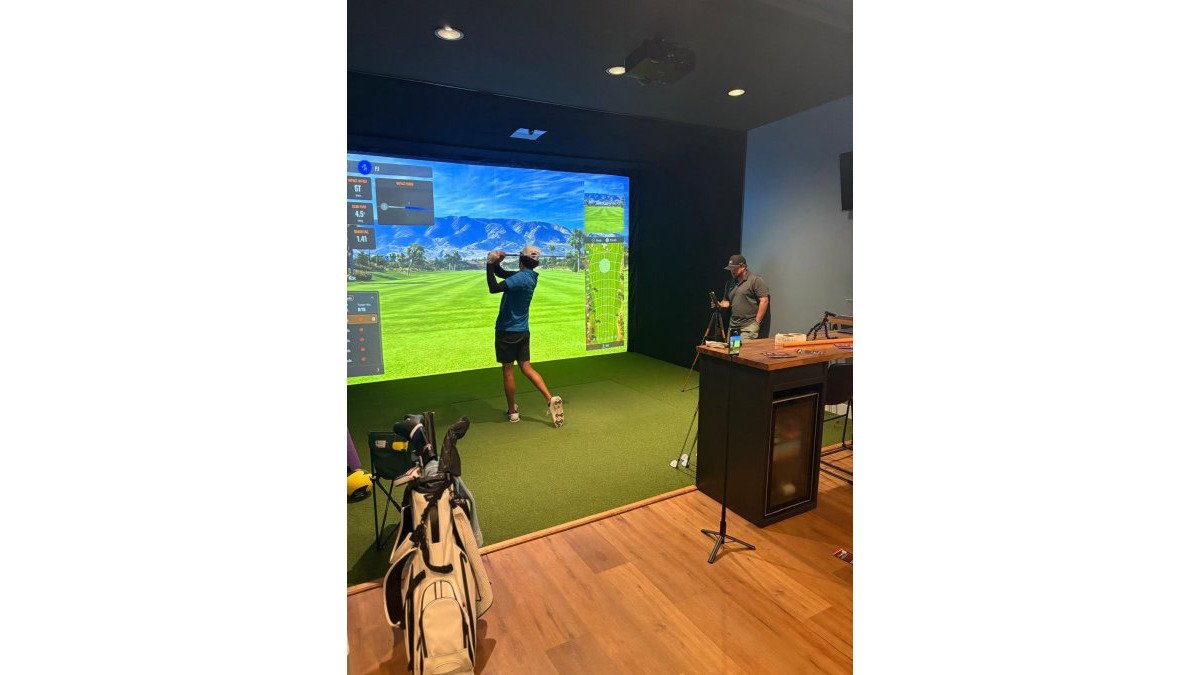
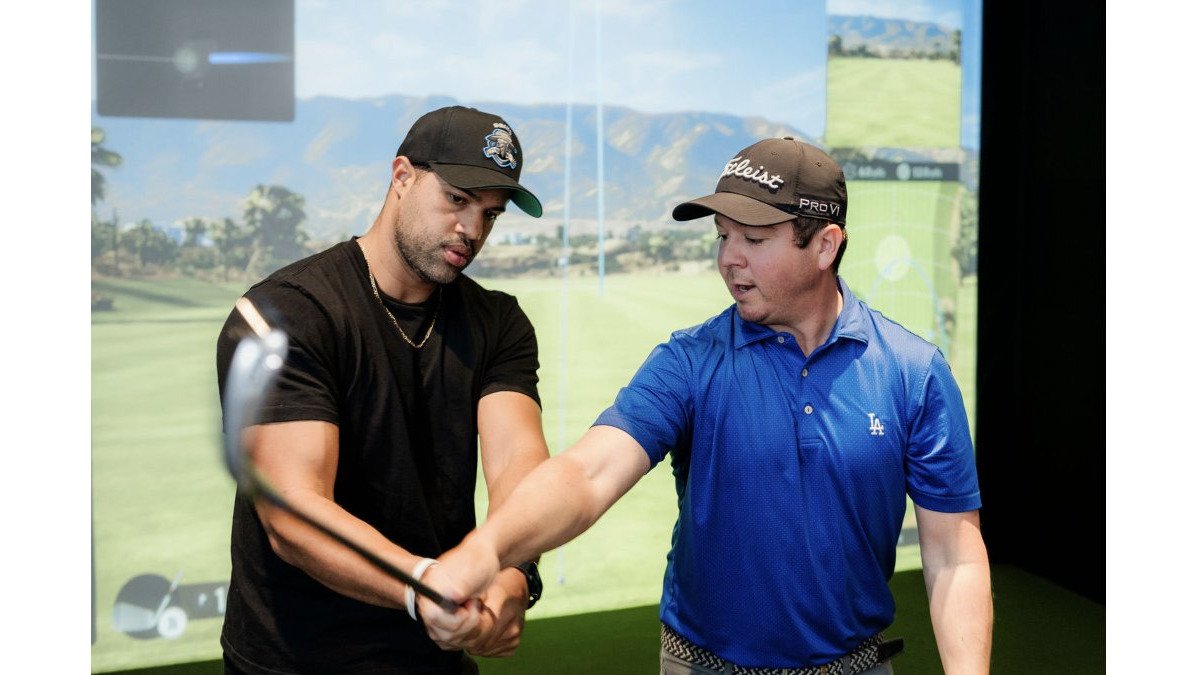
- Golf Simulator Practice for Beginners: What to Expect at the Bay
- Trackman Practice for Beginners: The Numbers Worth Watching
- Drills to Run in the Bay: Putting, Chipping, and Full Swing
- Common Beginner Mistakes and How to Correct Them
- Booking Your First Indoor Golf Practice Session at SVN2 Indoor Golf
- Frequently Asked Questions
What You Need Before Your First Indoor Golf Practice Session
Indoor golf practice for beginners starts with less gear than you think: clubs, flat-soled shoes, and a plan. New players often arrive with every gadget and no clear idea what to work on first.
Clubs, Shoes, and the Gear That Actually Matters
Bring the clubs you already own. A beginner set with a driver, a few irons, a wedge, and a putter is enough to start; you do not need a matching set or new irons.
Shoes matter more than most beginners expect. Flat-soled sneakers or golf shoes give you a stable base on the turf mat.
Skip the extras for now. Alignment sticks are cheap and useful. A glove helps with grip consistency. Everything else can wait until you know what your swing actually needs.
Training Aids Worth Using in the Bay
Most training aids sold to beginners solve problems the beginner does not have yet. The aids below give immediate feedback without changing your setup:
-
Alignment sticks: two sticks form a track for your feet and a line for your target. This is the single most useful aid for a beginner because alignment errors are the most common cause of a ball that starts offline.
-
A launch monitor or simulator readout: the Trackman simulators provide this, so you do not need to buy a personal monitor.
Beginners generally benefit from fewer aids and more reps on the fundamentals.
Do not buy a training aid to fix a problem you have not yet diagnosed. Hit twenty balls in the bay first, look at the data, then decide whether an aid addresses what the numbers show.
Matching Your Setup to the Space You Are Practicing In
Beginners should know what the bay provides and what it does not:
For a full walkthrough of how to organize your time in the bay, see our guide on how to structure an indoor golf session.
Building an Indoor Golf Practice Routine for Beginners
A good indoor golf practice routine for beginners follows the same shape every time: warm up, work one skill, then finish with full swings. Structure beats volume. Fifty focused balls beat 150 mindless ones.
We recommend a set sequence you repeat each visit. Repetition builds a repeatable swing; random flailing builds a repeatable mess.
A Simple Warm-Up Sequence
Start with five minutes of movement before you hit a ball:
- Ten slow shoulder turns with a club across your chest
- Ten hip rotations, hands on your hips
- Five minutes of half-speed wedges, just loosening up
- Ten putts on the putting mat to feel the stroke
The goal is blood flow and feel, not distance. A study indexed by PubMed Central on safety practices in indoor golf training links proper safety management and trainer trust to better training satisfaction and continuity, which is exactly why a warm-up belongs in every session.
For a full walkthrough of how to organize your time in the bay, see our guide on how to structure an indoor golf session.
How Long Should a Beginner Golf Practice Session Length Be?
The ideal beginner golf practice session length is 45 to 60 minutes. That window is long enough to warm up, drill one skill, and hit full swings without fatigue wrecking your swing.
Longer is not better. Past an hour, most beginners start swinging harder and losing posture. Bad reps teach bad habits.
A simple split:
- 10 minutes: warm-up and putting
- 20 minutes: one drill, such as chipping or path work
- 20 minutes: full swing with a target
Two or three sessions a week beats one marathon session. Short and frequent wins.
A beginner session fits inside a 45-to-60-minute window, split like this.
| Block | Time | What to do |
|---|---|---|
| Warm-up and putting | 10 minutes | Loosen up and feel the stroke |
| One drill | 20 minutes | Chipping or path work |
| Full swing | 20 minutes | Swing with a target |
| Cool down and review | 10 minutes | Review your numbers |
Time
Golf Simulator Practice for Beginners: What to Expect at the Bay
Golf simulator practice for beginners feels more real than most first-timers expect.
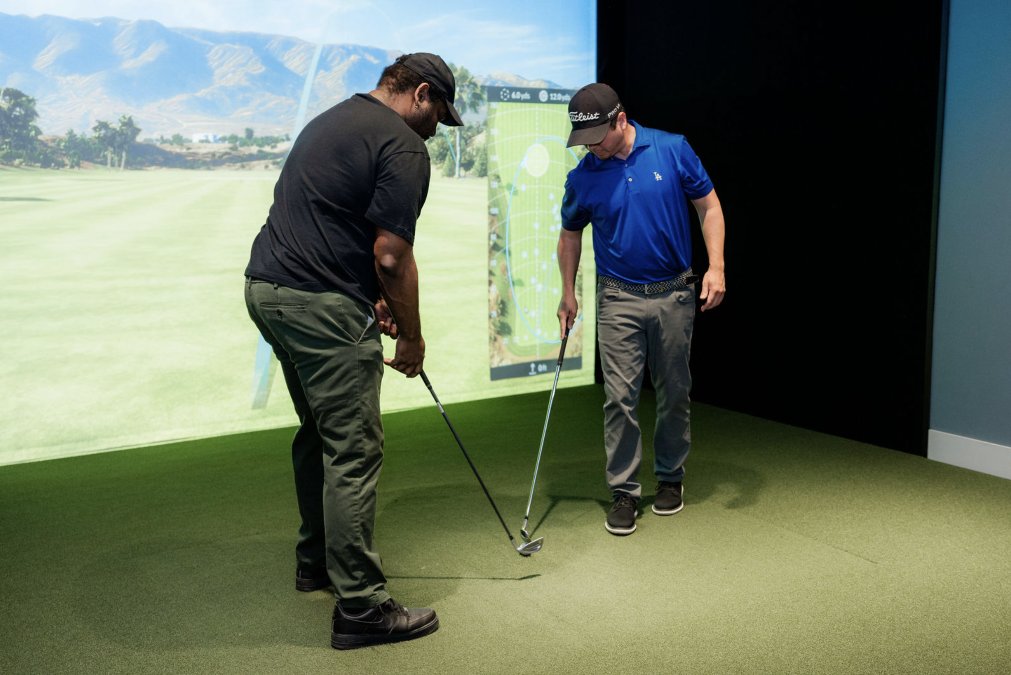
Your first visit is about getting comfortable. Expect to hit shots, watch the ball fly on screen, and see the numbers appear after each swing. You do not need to understand every metric on day one.
Simulator practice also removes the weather excuse. As Play Golf VX's guide to year-round indoor practice notes, indoor training lets you work on your game in any season while tracking metrics like ball speed, launch angle, and spin axis.
Trackman Practice for Beginners: The Numbers Worth Watching
Trackman practice for beginners comes down to a few key numbers. Ignore the full data screen at first.
Three Metrics to Track in Your First Month
- Carry distance: how far the ball flies before it lands. Track it with your 7-iron and driver only.
- Club path: whether your club swings left or right through impact. This drives curve.
- Face angle at impact: where the clubface points when it meets the ball. Face angle controls start direction.
Write these down after every session. Trends matter more than single swings. If you want a deeper walkthrough, our guide on how to read golf simulator data breaks down each metric step by step.
Drills to Run in the Bay: Putting, Chipping, and Full Swing
Drills turn a practice session into progress. Run one drill per skill block, and keep the reps slow, speed hides mistakes. The drills below are ordered the way a beginner should run them in a single SVN2 bay session: putting first, chipping second, full swing last.
Putting Drill: The Gate and the Ladder
Set a target line with an alignment stick and roll ten putts from the same distance. Count how many finish inside a club length of the hole. That is your baseline.
Then run the gate drill. Place two tees just wider than your putter head, about six inches in front of the ball. Roll ten putts through the gate without touching a tee.
Finish with a ladder: putt from 3, 6, 9, and 12 feet, three balls from each distance. Track how many of the twelve finish within a putter length of the hole. A common beginner target is six out of twelve. When you hit that twice in a row, move the ladder back by two feet.
Chipping Drill: Land Spot, Then Roll
Hit ten chips to one target and track how many land within a few feet. Distance control comes from repetition, not power.
Pick a landing spot two paces onto the mat and a hole or target another three paces past it. Land the ball on the spot and let it roll to the target. Count how many of ten finish within a putter length of the target.
Watch out: do not chip with a wristy, scooping motion. Keep the hands ahead of the ball at impact and let the club's loft do the work. If the ball pops up and stops short every time, you are scooping.
Full Swing Drill: Path, Then Tempo
Place an alignment stick on the mat to mark your target line. Hit ten shots working on swing path, then ten working on tempo and balance.
For path work, put a second stick just outside the ball on your target line.
For tempo work, count a three-beat rhythm out loud: one (backswing), two (transition), three (through impact). Hit ten shots at that rhythm and check the Trackman readout for carry distance consistency.
A Four-Week Progression for the Bay
A simple progression builds a swing more reliably than scattered drills. Run this plan two or three times per week, keeping each session to the 45-to-60-minute window covered earlier.
- Week 1, Contact and start line: putting gate drill, chipping land-spot drill, and full-swing path drill with the alignment stick. Goal: center contact and a ball that starts on the target line.
- Week 2, Distance control: putting ladder from 3 to 12 feet, chipping to three landing spots, and full-swing tempo drill with the three-beat count. Goal: carry distances within ten yards of each other with the same club.
- Week 3, Combine skills: alternate putting, chipping, and full swing in shorter blocks, and add one full-swing set with the driver. Goal: hold posture and rhythm when you switch clubs.
How to Measure Progress Without a Launch Monitor
You do not need a personal launch monitor to track improvement. The bay provides the numbers, and you can add simple self-checks on top:
- Start direction: after each putt or chip, note whether the ball started on your intended line. A simple tally of on-line versus off-line is enough.
- Putting distance control: record how many of twelve ladder putts finish within a putter length.
- Consistency: look at the spread of carry distances with the same club on the Trackman readout. A tighter spread means a more repeatable swing.
Write these four numbers down after every session, trends matter more than any single swing. For a deeper walkthrough of the data, our guide on how to read golf simulator data breaks down each metric step by step.
Our full library of indoor golf practice drills covers putting, chipping, and full swing progressions you can run in the bay.
Common Beginner Mistakes and How to Correct Them
A common beginner mistake is swinging too hard, which often adds sway and poor contact.
Other mistakes we see often:
- No target: always pick a line, even indoors
- Too many swing thoughts: pick one cue per session
- Skipping the short game: putting and chipping are half your score
A slice is the most common fix beginners need. If the ball keeps curving right, our step-by-step guide on how to fix a golf slice indoors walks through the clubface and path corrections to work on.
Booking Your First Indoor Golf Practice Session at SVN2 Indoor Golf
Ready to practice? Booking your first session at SVN2 Indoor Golf is simple. We run fully self-service facilities with Trackman simulators, so you can train on your own schedule.
Here is how to get started:
- Pick a time that fits your week and book your bay
- Bring your clubs and flat-soled shoes
- Warm up, run one drill, and track your key numbers
- Review your data and book your next session
Students, faculty, first responders, seniors, and veterans can ask about our community memberships.
Our booking guide for a first simulator session covers the full process from start to finish.
The gap between beginners who improve and beginners who stall is rarely talent. It is structure.
Frequently Asked Questions
What is a good practice routine for a beginner golfer?
Start with five to ten minutes of warm-up swings, then work through one skill at a time: putting, chipping, then full swing. A simple indoor golf practice routine for beginners might be 10 minutes of putting, 10 minutes of chipping, and 20 minutes of full swing with a single club. Repeat the same order each visit so you can compare results and see progress instead of guessing.
How long should a beginner's golf practice session be?
Aim for 30 to 45 minutes. Beginners lose focus and swing quality drops after about 45 minutes of concentrated work. Shorter, focused sessions two or three times a week beat one long session. Use the first five minutes to warm up and the last five to review your numbers so the middle block stays productive.
What Trackman data should a beginner pay attention to?
Focus on a small set of core numbers and ignore the deeper metrics at first. Track the same numbers across several sessions to see real trends.
Can a golf simulator actually help beginners improve?
Yes, when you use it with a plan. A simulator gives you immediate feedback on every shot, which is hard to get at a range where you cannot see ball flight data. Golf simulator practice for beginners works because you can repeat the same shot and compare results. Combine that with a set routine and a consistent session length, and you have a measurable way to see whether your swing is changing.