 ultimate-guide
Indoor Golf Practice Drills 2026: A Complete Guide
Table of Contents
- Why Indoor Golf Practice Drills Work Better Than Range Sessions
- Build Your Indoor Golf Practice Plan Before You Swing
- Trackman Golf Practice Drills That Turn Data Into Shots
- Golf Distance Control Drills for Consistent Yardages
- How Often to Practice Golf Indoors for Real Improvement
- A Sample 60-Minute Session at SVN2 Indoor Golf
- Conclusion
- Frequently Asked Questions
Last Updated: October 18, 2026
Why Indoor Golf Practice Drills Work Better Than Range Sessions
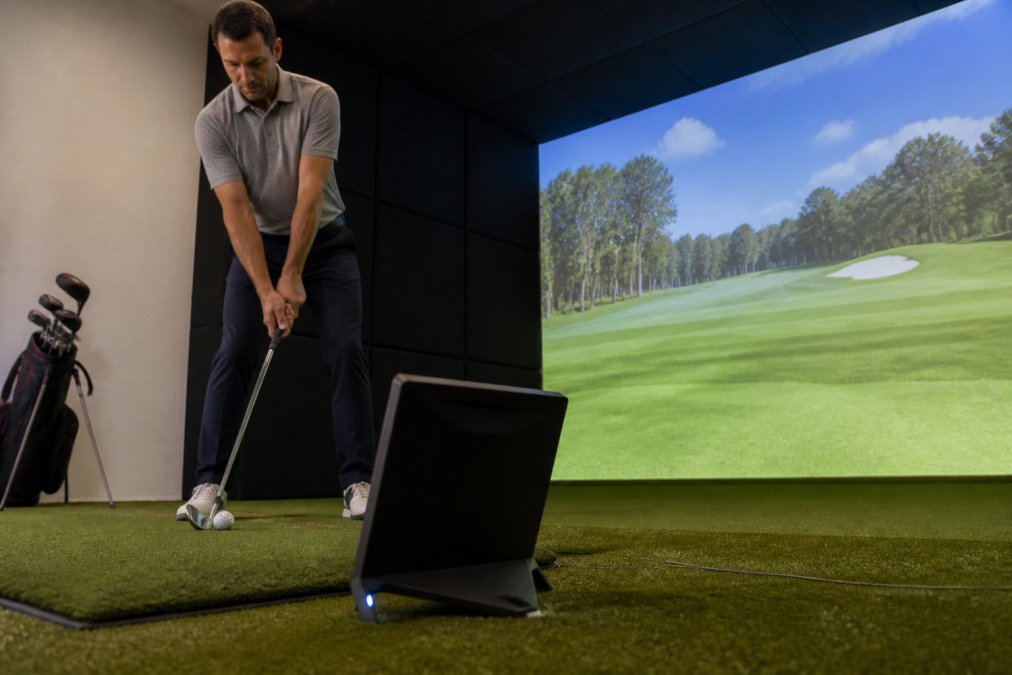
Indoor golf practice drills in 2026 give you something the outdoor range never could: a number for every shot. At SVN2 Indoor Golf, we built our facility around that idea, because feedback is what turns repetition into improvement. Hit 100 balls at a range and you walk away with a feeling. Hit 100 balls into a Trackman bay and you walk away with club path, face angle, and carry distance for every one of them.
The range has one other problem: you cannot see the ball land. Indoor simulators show you the full flight, the landing spot, and the rollout. That closed feedback loop is the entire point.
A common mistake is treating simulator time as entertainment. Golfers who improve fastest treat each session as a lab, with a question to answer and numbers to check.
Build Your Indoor Golf Practice Plan Before You Swing
An indoor golf practice plan is a written list of what you will work on, in what order, and for how long. Golfers who arrive without one usually hit driver for 40 minutes and leave. The plan is what separates a session from a workout.
Set a Goal for Every Session
Pick one target per visit. Not "get better." Something measurable: reduce your slice, or carry your 7-iron within a five-yard window. One goal keeps your attention on one change.
Split Your Time Into Blocks
Divide the session into blocks with a fixed clock. A workable split:
- 10 minutes warm-up with wedges
- 20 minutes on the session's single technical goal
- 20 minutes on distance control
- 10 minutes playing simulated holes
The clock matters. Without it, the technical block swallows the whole session.
Trackman Golf Practice Drills That Turn Data Into Shots
Trackman golf practice drills work because they pair a swing change with instant measurement. The screen tells you whether the change actually happened, which is something feel alone cannot do.
Here is a drill set we recommend for the data block of any session:
- Face angle ladder. Hit 10 shots aiming at a target, then check face angle at impact. Repeat until the number sits inside your intended window.
- Path correction. If you fight a slice, hit 15 shots trying to move club path toward neutral. Watch path, not ball flight, for the first five.
- Smash factor check. Hit 10 drivers and watch smash factor. It tells you whether you are finding the center of the face.
The Three Numbers That Matter Most
Most golfers drown in data. Start with three numbers: club path, face angle, and carry distance. Path and face explain curvature; carry explains your yardage book. Ignore the rest until those three are stable.
Golf Distance Control Drills for Consistent Yardages
Golf distance control drills train your ability to hit a specific number, not your best number. That distinction matters more than raw power.
Try this ladder drill on the simulator. Hit your wedge to 40 yards, then 50, then 60, then 70, then back down. You pass the drill when five consecutive shots land within a five-yard window of the called number. It is harder than it sounds, and it translates directly to scoring clubs on the course.
A second drill: pick a flag on a simulated par 3 and hit ten shots, logging carry for each. The goal is a tight cluster, not one perfect shot. Consistency is the skill.
How Often to Practice Golf Indoors for Real Improvement
Practice indoors two to three times per week for 45 to 60 minutes, and you will see measurable change faster than one long weekend session. Frequency beats duration. Short, focused visits keep a swing change fresh between sessions.
The self-service, pay-as-you-go model at SVN2 Indoor Golf makes that cadence realistic. Drop in when you have 30 minutes free; no membership booking required. Busy professionals in the area tell us this flexibility is the difference between practicing and not. Maintaining this consistent routine becomes significantly easier when your bag is already organized with the essential golf accessories required to transition seamlessly from the simulator bay to the first tee.
| Practice Frequency | Session Length | Best For |
|---|---|---|
| 1x per week | 60-90 min | Maintaining your current game |
| 2-3x per week | 45-60 min | Making a swing change stick |
| 3-4x per week | 30-45 min | Pre-tournament sharpening |
A Sample 60-Minute Session at SVN2 Indoor Golf
Here is the exact session structure we suggest for a first visit. Total time: 60 minutes.
- Warm-up (10 min). Wedges only. Loosen up, no data goals.
- Technical block (20 min). One goal, one variable, checked on the Trackman screen.
- Distance ladder (20 min). The 40-to-70-yard ladder drill above.
- Simulated holes (10 min). Play three holes and commit to every shot.
What you'll need: your clubs, and a goal written down before you arrive. That is it.
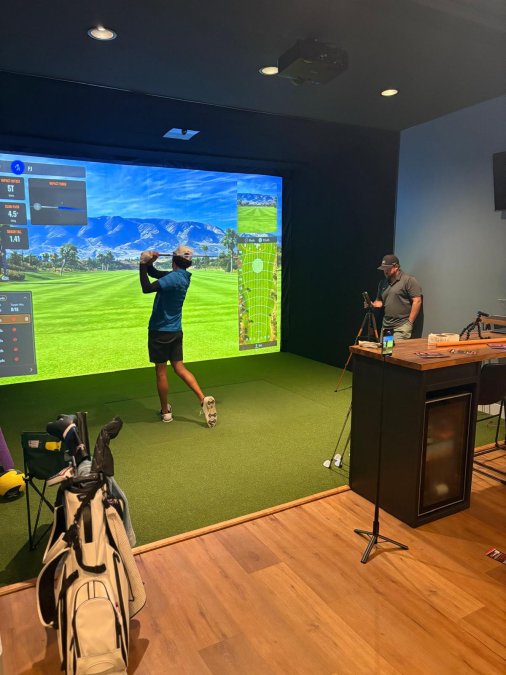
For any golfer who geeks out on swing data, this is the environment that rewards it. As one of our regulars, Cam B, puts it, the simulators give you a detailed breakdown of every swing. That is the whole premise: see the number, change the number.
Conclusion
The hardest part of improvement is not effort. It is knowing whether your effort is working. Indoor golf practice drills solve that problem by putting a measurement on every swing, and a structured indoor golf practice plan makes sure you use the time well. SVN2 Indoor Golf gives you Trackman simulators, detailed swing data, and fully self-service bays on a pay-as-you-go basis, so you can practice on your own schedule. Book now and turn your next session into evidence.
Frequently Asked Questions
What are the best indoor golf practice drills?
The best indoor golf drills target one skill at a time. Start with a wedge distance ladder to build feel, then move to a gate drill for start-line control, and finish with a driver dispersion drill where you track carry and offline numbers on the Trackman. At SVN2 Indoor Golf, each drill gives you immediate feedback, so you can adjust within the same session instead of guessing. Keep each drill to 10-15 minutes and log your numbers so you can measure progress week over week.
How often should I practice golf indoors?
Two to three focused sessions per week beats one long marathon. For most players, 45-60 minutes per session is enough to work through a structured indoor golf practice plan without fatigue setting in. If you are short on time, a 30-minute session focused on one drill still builds consistency. The key is regularity: hitting balls twice a week at SVN2 Indoor Golf will show up in your numbers faster than a single two-hour block on the weekend.
How long should an indoor golf practice session last?
Plan for 45 to 60 minutes. Spend the first 10 minutes warming up with wedges, then 30 minutes on your two priority drills, and finish with 10-15 minutes of simulated course play. Sessions longer than 90 minutes tend to produce diminishing returns because focus drops and bad habits creep in. At SVN2, the self-service setup lets you start and stop on your schedule, so you can fit a productive session into a lunch break or an evening slot.
How can I use Trackman data to improve my golf swing?
Pick two or three metrics and ignore the rest at first. Club path, face angle, and smash factor tell you most of what you need: path and face explain curve, and smash factor shows how efficiently you are transferring energy. In Trackman golf practice drills, hit ten shots, note the average path and face numbers, then make one adjustment and hit ten more. Comparing the two sets shows whether the change actually worked, which is far more reliable than judging by feel alone.
Can indoor golf drills help improve accuracy and distance?
Yes, because the simulator measures both. Accuracy improves through start-line and gate drills that give you instant feedback on face angle. Distance improves through golf distance control drills, where you hit to specific yardages and check carry numbers against your target. At SVN2 Indoor Golf, every shot is tracked, so you can see whether a swing change added yards or just changed dispersion. Repeatable numbers over several sessions are the clearest sign the work is translating.
How do I structure an indoor golf practice session?
Use a three-block structure: warm-up, focused skill work, and transfer. Warm up for 10 minutes with short wedges. Then spend 30 minutes on one or two drills tied to a specific goal, such as tightening driver dispersion or dialing in a 150-yard carry. Finish with 10-15 minutes of simulated holes so the skill gets tested under pressure. Book a bay at SVN2 Indoor Golf, bring your plan, and log your numbers at the end so the next session starts where this one left off.