 ultimate-guide
Golf Practice Drills for Winter: A Complete Guide
Table of Contents
- Why Winter Golf Practice Matters
- Indoor Golf Swing Drills for Consistent Mechanics
- Golf Simulator Practice Routines That Build Consistency
- Off-Season Golf Training Plan for Winter Months
- Mental Game and Visualization Techniques
- Setting Up a Space-Constrained Practice Environment
- Budget-Friendly DIY Training Aids for Winter Practice
- Gamifying Your Winter Golf Practice
- Frequently Asked Questions
Last Updated: September 28, 2026
Why Winter Golf Practice Matters
Winter offers the perfect opportunity to refine fundamentals without competitive pressure. Serious players use the off-season to build consistency that translates directly to lower scores when the season resumes.
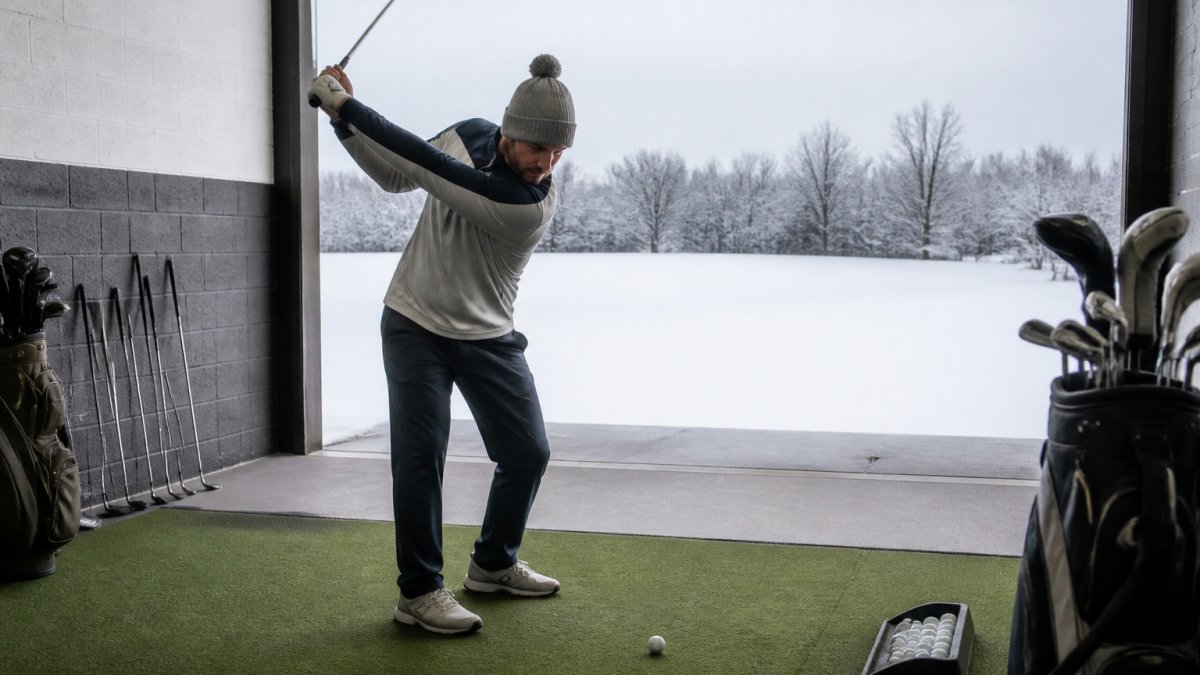
Cold weather, shorter daylight hours, and course closures eliminate traditional practice options. Indoor golf practice drills for winter become essential, allowing you to maintain swing speed, work on specific mechanics, and analyze data that outdoor ranges cannot provide.
Structured, data-driven practice produces dramatic improvements. Winter practice forces you to identify what needs work instead of hitting balls mindlessly.
Indoor Golf Swing Drills for Consistent Mechanics
The foundation of winter improvement is building reliable swing mechanics through targeted drills. Indoor facilities give you the precision feedback needed to ingrain proper sequencing, weight transfer, and clubface control without environmental variables like wind or uneven terrain.
Impact Position and Ball Compression Drills
Your impact position determines ball flight, distance, consistency, and accuracy. Small variations create massive differences in results. Winter allows you to repeat drills dozens of times without fatigue affecting your form.
The half-swing compression drill is highly effective. Take a 7-iron and make swings reaching only waist height on the backswing, focusing on compressing the ball with your hands ahead of the clubface. Most golfers have their hands behind or level at impact, killing distance and consistency. This drill forces proper sequencing by limiting momentum.
The impact tape feedback drill reveals strike location patterns. Place impact tape on the clubface and hit 10-15 shots, tracking whether you're hitting off-heel, off-toe, or high on the face. Consistent center strikes improve distance control dramatically.
Half-Speed Swing Drills for Muscle Memory
Half-speed swings build neural pathways for proper mechanics without velocity masking flaws. Slow swings reveal every error.
The tempo and rhythm drill involves swings at 50-60% speed with perfect sequencing. Count: one-thousand-one (backswing), one-thousand-two (transition), one-thousand-three (downswing). This develops timing that separates consistent golfers from erratic ones.
The transition drill addresses rushing from backswing to downswing. Make slow swings with a deliberate pause at the top, feeling your lower body start the downswing while your upper body lags. This separation generates clubhead speed and compression.
Golf Simulator Practice Routines That Build Consistency
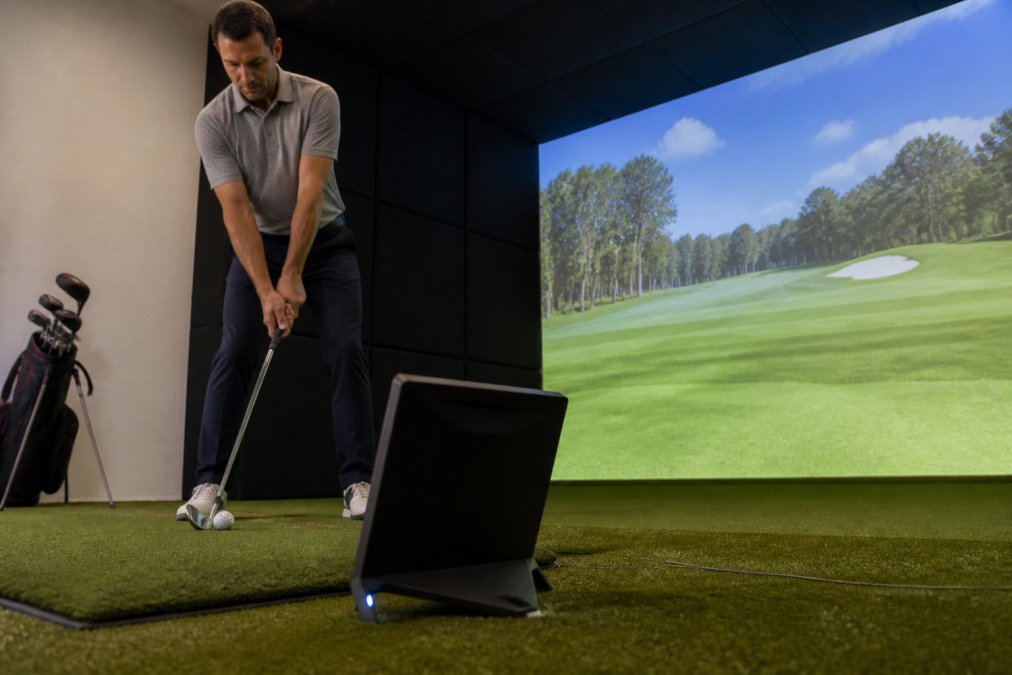
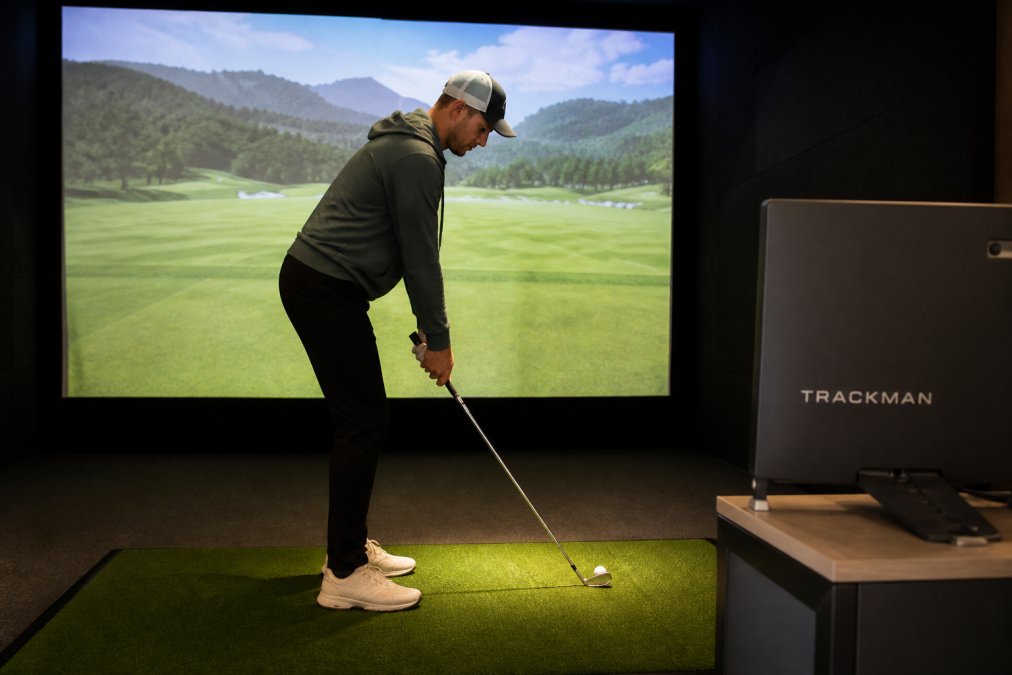
Golf simulators are precision training tools providing data no outdoor range can match. Structured routines create accountability and measurable progress.
Using Launch Monitor Data to Track Progress
Launch monitor technology measures ball speed, launch angle, spin rate, carry distance, and shot shape, transforming vague concepts into measurable metrics.
Baseline testing involves hitting 10 shots with each club and recording carry distance, dispersion, and consistency. Repeat after two weeks to measure improvement in consistency or distance.
The target practice routine uses simulator feedback for specific yardages (100, 125, 150, 175 yards). Hit 20 shots at each distance, tracking how many land within 10 yards of target. This builds distance control that separates single-digit handicaps from mid-range players.
Short Game and Putting Practice at Home
The short game determines your score more than anything else. Indoor practice eliminates winter neglect.
A putting mirror drill (under $20) reveals alignment issues immediately. Place it along your target line and make strokes. Five minutes daily builds proper stroke mechanics.
A net and mat setup in a garage or basement enables year-round chipping practice. Focus on distance control by hitting chips to targets at 20, 30, and 40 feet.
Off-Season Golf Training Plan for Winter Months
A structured training plan balances swing mechanics, short game, physical conditioning, and mental preparation.
Physical Conditioning and Strength Training
Winter is ideal for building strength and power that increases clubhead speed and consistency.
Power training focuses on explosive movements: medicine ball rotations, cable chops, and explosive squats. Two sessions weekly of 20-30 minutes produces noticeable swing speed improvements within 4-6 weeks.
Hip rotation mobility is critical for proper sequencing.
Mobility Exercises for Winter Injury Prevention
Cold weather increases injury risk. Winter mobility work prevents injuries that could derail your season.
Mental Game and Visualization Techniques
Physical practice means nothing without mental preparation. Winter is the ideal time to develop visualization skills that improve performance.
Setting Up a Space-Constrained Practice Environment
Effective practice requires only 8 by 8 feet of floor space and 8 feet of ceiling height. This section provides solutions for every living situation.
Apartment-Specific Setup: Hallway and Bedroom Options
A standard apartment hallway (3 feet wide, 15-20 feet long) suits putting and short-game practice. A bedroom (12 by 14 feet) accommodates a complete setup.
Basement and Garage Setups for Maximum Practice
Basements and garages offer more space but come with specific constraints.
Space-Efficient Equipment Selection
Hitting nets: A 6 by 6 foot net is ideal, large enough for full swings but compact for storage. Cost: $80-150.
Creating Dedicated Practice Zones
Even in small spaces, separate your practice areas by function.
Apartment-Specific Practice Scheduling
Respect your neighbors by practicing during appropriate hours.
Optimal practice times: 9 AM to 5 PM on weekdays, 10 AM to 4 PM on weekends. These windows minimize noise complaints while providing adequate daylight.
Budget Breakdown for Apartment Setup
Minimal setup (putting only): $40-80 (putting mat)
Basic setup (putting + short game): $120-200 (putting mat + hitting net + hitting mat)
Budget-Friendly DIY Training Aids for Winter Practice
Professional equipment costs money, but effective training aids don't require expensive purchases.
Gamifying Your Winter Golf Practice
Motivation drops during winter without competitive elements. Gamifying practice maintains engagement and accelerates improvement.
Frequently Asked Questions
What is a good practice routine for golf during the winter?
A solid winter golf practice routine combines indoor golf swing drills, simulator work, and physical conditioning. Spend 40% of time on swing mechanics using impact tape and half-speed drills, 30% on short game and putting, and 30% on strength and mobility work. Use launch monitor data to track ball compression, swing speed, and clubface control. Aim for 3-4 sessions weekly, 45-60 minutes each. This approach maintains consistency during off-season months when outdoor range access is limited.
How can I maintain my golf swing mechanics without a driving range?
Indoor golf swing drills and golf simulator practice routines are your best tools. Work on takeaway, transition, and downswing mechanics using alignment sticks and impact tape in confined spaces. Half-speed swings build muscle memory without requiring distance. Use a putting mirror to check setup fundamentals. Launch monitor feedback from simulators shows your actual swing plane, weight transfer, and hip rotation. This data-driven approach reveals exactly what needs correction, making winter practice more efficient than outdoor range work.
What launch monitor data should I focus on during winter training?
Prioritize ball compression, strike location, swing speed, and clubface control. Ball compression shows if you're making solid contact at impact position. Strike location on the clubface reveals whether you're hitting the sweet spot consistently. Swing speed tracks power development through your off-season conditioning work. Clubface control at impact indicates your ability to manage direction. These metrics create a feedback loop that guides your practice, letting you see exactly which drills are improving your fundamentals.
Can I actually improve my game indoors, or does winter practice feel disconnected from real golf?
Indoor golf simulator practice routines produce measurable improvements because they isolate the mechanics that matter. Trackman simulators replicate real course conditions and provide data you'd never get outdoors. The feedback loop from launch monitor data is actually more precise than hitting balls at a range. Golfers often improve faster indoors because they can focus on specific flaws without weather distractions. The key is using the data to reinforce proper setup fundamentals, tempo, and rhythm, skills that transfer directly to the course when spring arrives.
What are the best drills for fixing a slice or hook during winter?
For a slice, focus on clubface control and hip rotation drills using alignment sticks. Impact tape shows whether your clubface is open at contact. Half-speed swings with exaggerated hip rotation build the muscle memory needed for a square clubface. For a hook, work on weight transfer and follow-through mechanics. Use launch monitor data to confirm your fix, look for consistent clubface angle and ball flight direction. Repeat the corrected motion 20-30 times per session to establish new patterns before spring play.
How does an off-season golf training plan prevent winter injuries?
An off-season golf training plan includes mobility exercises and strength conditioning that prepare your body for the demands of the swing. Winter months are ideal for building power and flexibility without the stress of competitive play. Focus on hip rotation mobility, core stability, and shoulder flexibility, areas that prevent common golf injuries. Gradual conditioning prevents sudden strains when you return to outdoor play. Mixing strength work with swing drills ensures your body can handle the power you're developing through your practice routine.
What's the 80/20 rule in golf practice?
The 80/20 rule in golf practice means 80% of your improvement comes from fixing 20% of your swing flaws. Identify your biggest mechanical weakness using launch monitor data and impact tape analysis. Focus 80% of your practice time on that one issue rather than spreading effort across multiple drills. This approach is especially effective during winter when practice time is limited. Once you've mastered that flaw, move to your next biggest issue. This targeted method accelerates improvement faster than generic practice routines.
How do I practice golf in a small apartment during winter?
Space-constrained apartment drills focus on short swings and mechanics without requiring distance. Use alignment sticks to check your setup fundamentals and takeaway. Half-speed swings with a weighted club build tempo and rhythm. Impact tape on a foam board shows your strike location. Putting mirrors help you verify alignment and posture. Mental rehearsal and visualization require no space at all. These drills develop the fundamentals that matter most. When you have access to a simulator facility, your mechanics will be sharp and ready for full-swing practice.