 comparison
Golf Envy Alternative for Training: 2026 Guide
Table of Contents
- Why Golfers Are Searching for a Golf Envy Alternative for Training
- Trackman Golf Performance Data: The Accuracy Standard at SVN2
- Self-Service Golf Practice Facilities: Practice on Your Schedule
- Indoor Golf Simulator Training vs. Range Sessions
- Skill-Specific Progression Paths Inside the Simulator
- What Matters Most When Choosing a Golf Envy Alternative for Training
- Conclusion: Book Your First Session at SVN2 Indoor Golf
- Frequently Asked Questions
Last Updated: October 4, 2026
Why Golfers Are Searching for a Golf Envy Alternative for Training
Golfers searching for a Golf Envy alternative for training usually want the same thing: a place to hit balls on their own schedule, see real numbers, and stop guessing. At SVN2 Indoor Golf, we built our facility around exactly that idea.
The old model of golf improvement had two options. According to the National Golf Foundation's participation research, off-course golf participation has grown steadily as players look for flexible ways to practice.
Below, we break down what actually matters: the data you get, the schedule you keep, and how to know whether a facility or a home setup fits your goals.
Trackman Golf Performance Data: The Accuracy Standard at SVN2
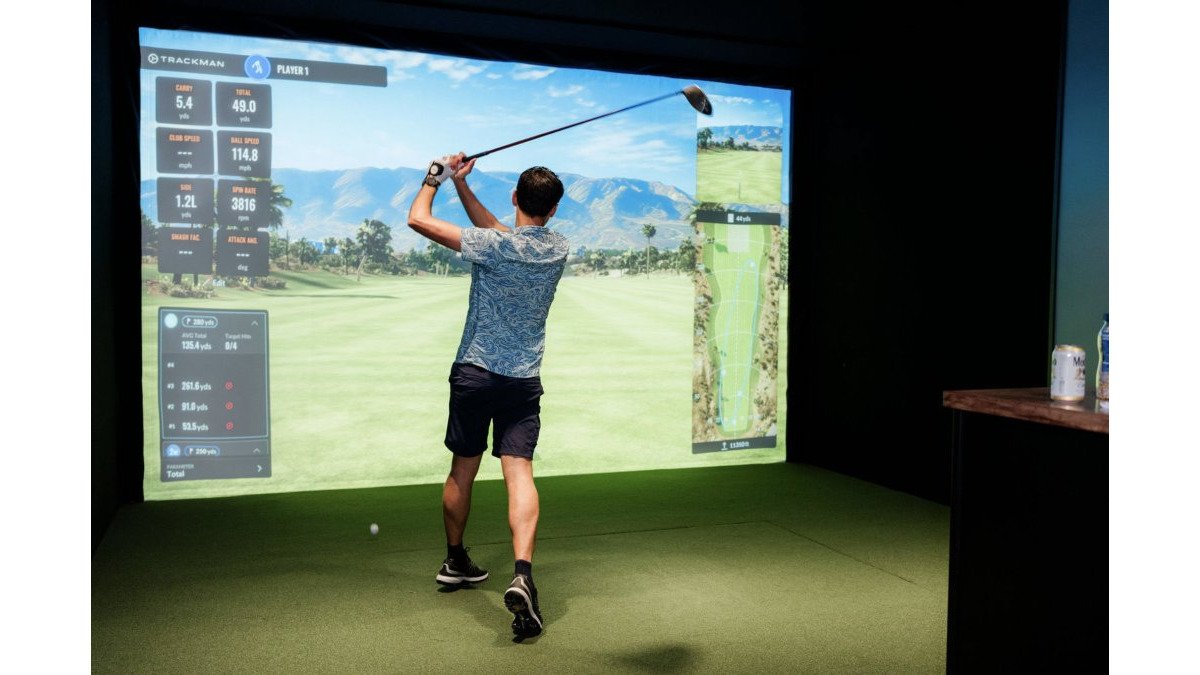
Trackman golf performance data is the reason serious players trust indoor practice. Trackman uses dual radar to track both the ball and the club, capturing data points that a camera or a phone app simply cannot measure.
How Trackman Measures Ball Flight and Club Delivery
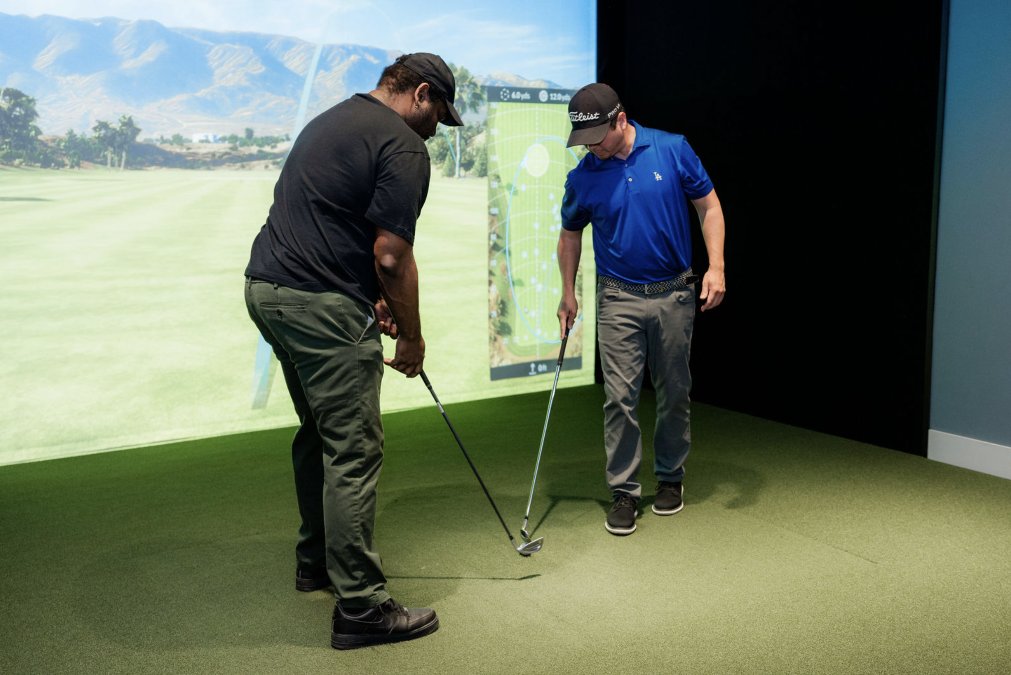
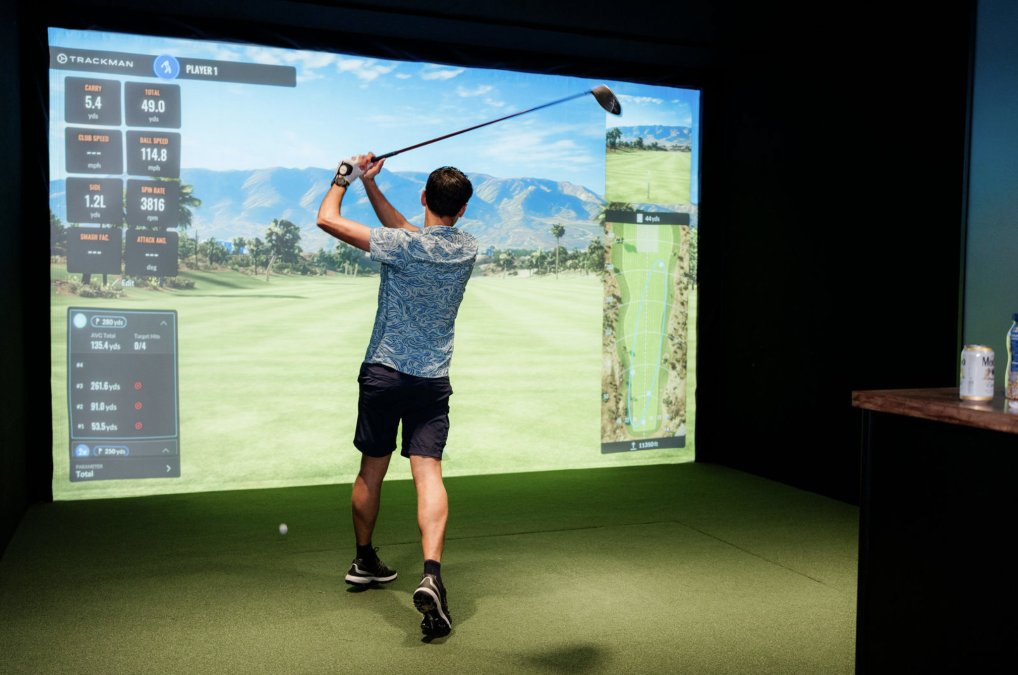
Trackman tracks the full flight of the ball and the path of the club through impact. That means you see club head speed, ball speed, launch angle, spin rate, and carry distance on every shot. The radar also reads club delivery: swing path, face angle, and attack angle. Together, those numbers explain why a shot curved, not just that it did.
Reading the Numbers That Change Your Game
Most golfers only need three or four numbers to improve. Smash factor tells you how efficiently you transferred energy to the ball. Shot dispersion shows how far offline your misses land. Spin rate explains why your approach shots stop or roll out. When you see these together, the feedback loop gets tight fast. You change one thing, hit ten balls, and watch the numbers respond.
Self-Service Golf Practice Facilities: Practice on Your Schedule
Self-service golf practice facilities let you walk in, hit, and leave without a front desk, a tee time, or a lesson booking.
SVN2 runs on a pay-as-you-go model. You book a bay, you practice, you go. No annual contract, no minimum visits. If you have thirty minutes between meetings, that is enough time to work on tempo or dial in wedge yardage.
The practical difference shows up in consistency. A golfer who practices three short sessions a week improves faster than one who grinds for two hours on a Saturday. Self-service access makes those short sessions possible.
| What You Need | How SVN2 Handles It | Why It Matters |
|---|---|---|
| Flexible timing | Book a bay when you are free | Fits around work and travel |
| Real swing data | Trackman in every bay | Feedback on every shot |
| No long commitment | Pay-as-you-go pricing | Try it before you commit |
| Access for everyone | Community memberships | Students, seniors, veterans, first responders |
Indoor Golf Simulator Training vs. Range Sessions
Indoor golf simulator training beats a range session for one simple reason: you get data instead of a guess. At an outdoor range you see the ball fly, but you cannot see spin rate, face angle, or smash factor. You feel a good strike and hope it repeats. Inside an SVN2 bay, every shot is measured by Trackman, and the numbers tell you whether the feel matched the reality.
What the Range Cannot Show You
A range ball flight is a single output. It tells you where the ball landed, not why. Trackman separates that single output into the inputs that produced it:
- Club path and face angle, the two variables that explain curve. A shot that starts left and cuts back is a face-to-path relationship, not a mystery.
- Attack angle and dynamic loft, the reason one iron balloons and the next one knifes. You can see whether you are adding or subtracting loft at impact.
- Spin rate and spin axis, the reason a well-struck approach holds a green or releases past it. Range balls and undulating turf hide this entirely.
- Smash factor, the efficiency of your strike. A dropping smash factor on the same club is the earliest signal of a swing flaw, often before the ball flight changes.
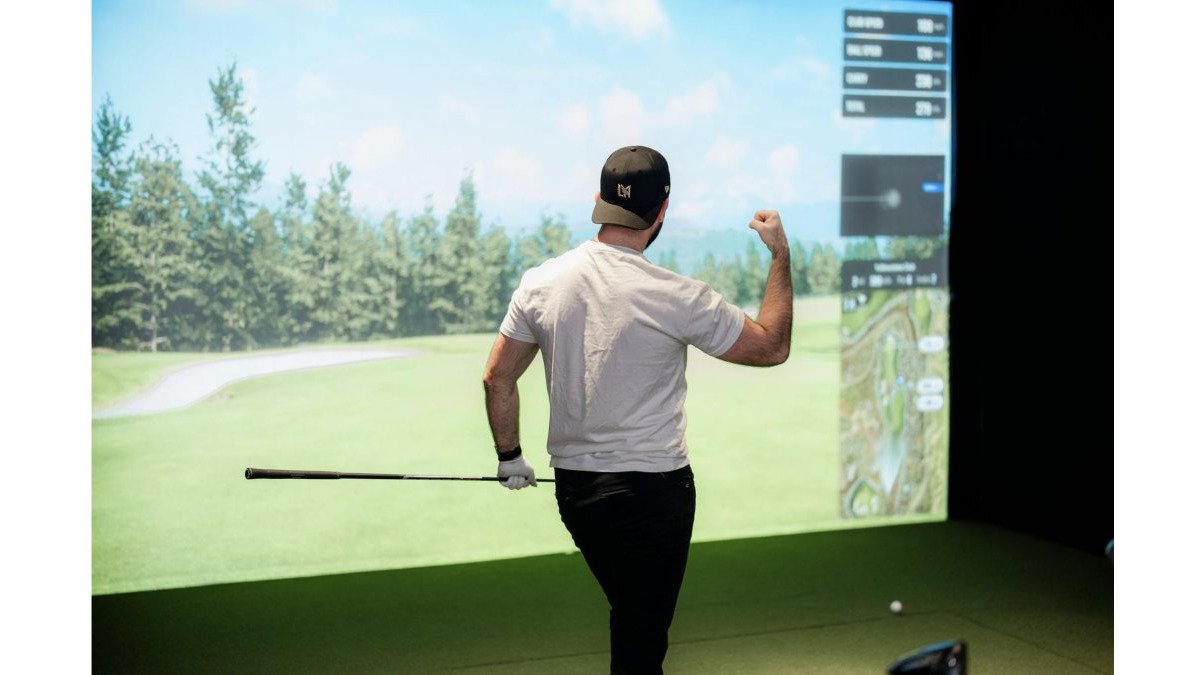
At SVN2, those numbers populate after every shot, so a session becomes a controlled experiment rather than a bucket of balls.
The Feedback Loop That Changes Behavior
The practical difference is loop speed. On a range, you hit a shot, watch it land, and form an opinion. The opinion might be wrong. In a bay, you hit a shot, read the number, adjust one variable, and hit again.
A common pattern among regulars is to pick one number per session and let it govern the work. If dispersion is the goal, you watch offline distance. If distance control is the goal, you watch carry and total. If strike quality is the goal, you watch smash factor. One number, ten balls, one adjustment.
Weather, Daylight, and the Calendar Problem
A range session depends on daylight and dry conditions. An indoor bay works at 9 p.m. in January. For anyone with a busy professional schedule, that reliability is what keeps practice from falling off the calendar. The range is a fair-weather tool; the simulator is an all-weather one.
Where the Range Still Wins
A range session has one advantage a simulator cannot replicate: real turf interaction and real ball flight against a real sky. If your goal is to feel a divot or judge a trajectory against wind, the range has value. The strongest approach is hybrid, use the SVN2 bay to measure and adjust the mechanics, then take those calibrated feels to the range or the course to confirm them outdoors. The numbers you trust indoors become the shots you trust outdoors.
Skill-Specific Progression Paths Inside the Simulator
Skill-specific progression paths turn random practice into a plan. Instead of hitting whatever club feels good, you build a sequence that targets one weakness at a time and uses the SVN2 bay's Trackman data to confirm whether the weakness is actually closing. Most competitors stop at generic advice like "practice your wedges." This is a measurable roadmap.
The Progression Framework
Every block follows the same structure: pick one skill, define the number that proves it, set a target, and repeat until the number holds under pressure.
Block 1, Strike quality (weeks 1-2). Wedges and short irons only. The governing metric is smash factor.
Block 2, Start line and curve (weeks 3-4). Mid-irons. The governing metrics are club path and face angle.
Block 3, Distance control (weeks 5-6). Full-swing yardage gapping with every club. The governing metrics are carry and total distance.
Block 4, Pressure and shot shaping (weeks 7-8). Virtual course play. The governing metric is execution rate, how often the shot you called is the shot you hit.
Why This Beats Generic Practice
The difference between this framework and hitting a bucket is the exit criteria. Each block has a number that tells you when to move on. Without exit criteria, golfers practice what they are already good at because it feels better. With them, the bay becomes a coach that does not let you skip the hard part.
The Hybrid Ecosystem
This is where a hybrid training ecosystem pays off. The simulator provides the measurement and the feedback loop; the physical work provides the feel. Use the SVN2 bay to identify the variable, use repetition to ingrain the change, then return to the bay to verify the number moved. The cycle repeats until the skill holds under virtual pressure, which is the closest thing to on-course pressure you can manufacture indoors.
What Matters Most When Choosing a Golf Envy Alternative for Training
The right Golf Envy alternative for training comes down to four things: data quality, access, cost model, and fit for your goals.
Data quality comes first. A Trackman simulator gives you tour-level accuracy on ball flight and club delivery. Anything less and you are practicing on numbers you cannot trust.
Access comes second. Ask whether you can drop in when you have thirty minutes, or whether you need to book days ahead. Self-service facilities win here.
Cost model comes third. Pay-as-you-go keeps you in control. You pay for the sessions you use, not a contract you forget about.
Fit comes last. If you want to geek out on swing data, a data-rich facility is worth it.
Conclusion: Book Your First Session at SVN2 Indoor Golf
Finding a training setup that fits your schedule and your goals should not be a compromise. SVN2 Indoor Golf gives you Trackman simulators in every bay, a fully self-service facility, and pay-as-you-go access that works around your life. Whether you want to dial in your yardage, analyze your swing mechanics, or just play a virtual round with friends, the bay is ready when you are. Book your first session at SVN2 Indoor Golf and start practicing smarter.
Frequently Asked Questions
What features should I look for in an indoor golf training facility?
Prioritize a facility that gives you real ball flight data, not just a screen to hit into. At SVN2 Indoor Golf, Trackman simulators capture club head speed, smash factor, spin rate, and shot dispersion on every swing. Look for self-service access so you can practice on your own schedule, and a pay-as-you-go model that does not lock you into a long contract.
How does Trackman technology improve golf swing mechanics?
Trackman uses dual radar to track both club and ball, so you see exactly what your swing produces. Face angle, swing path, and launch angle are measured on every shot. That feedback loop lets you connect a specific feel to a specific result. Golfers who geek out on swing data find SVN2 a must-visit for this reason. You adjust, hit again, and see the change in real time.
Is a self-service golf facility better for focused practice?
Self-service facilities remove the pacing and pressure of a traditional range or club fitting. At SVN2 Indoor Golf, you control the session: how long you hit, which data points you review, and whether you play a virtual course or run structured drills. For golfers who want practice efficiency, that control matters more than a crowded range where you cannot see what the ball actually did.
How can I track my progress at an indoor golf facility?
Trackman stores your session data, so you can compare carry distance, dispersion, and smash factor from one visit to the next. Set a baseline in your first session, then revisit the same club and shot type weekly. The real-time analytics at SVN2 Indoor Golf show whether your swing path and face angle are trending toward your target or drifting.
What makes a high-quality indoor golf training environment?
Accuracy, repeatability, and comfort. SVN2 Indoor Golf uses Trackman simulators, the same radar platform used by touring professionals, so the ball flight data you see indoors translates to what you experience on a real course. The bays are calibrated for indoor conditions, the space is fully self-service, and you can practice in any weather without booking weeks ahead.