 listicle
Which Launch Monitor Measures Swing Speed Best in 2026?
Last Updated: October 26, 2026
Quick Summary
TrackMan provides the most accurate launch monitor swing speed measurement, using dual-radar technology to capture clubhead speed at impact alongside ball speed, smash factor, and carry distance. At SVN2 Indoor Golf, professional-grade TrackMan systems deliver real-time feedback and comprehensive metrics that reveal patterns and drive measurable improvement.
- TrackMan measures swing speed at impact, not backswing or mid-downswing, ensuring accurate readings tied to actual ball contact
- Radar-based systems outperform camera-only devices for swing speed accuracy, especially outdoors and in controlled facility settings
- Smash factor matters as much as club speed; two golfers with identical swing speed can differ by 15-20 yards based on strike quality
- Repeatability across multiple swings matters more than a single reading; consistent clustering within a narrow band indicates true measurement accuracy
- SVN2's dual-radar TrackMan system captures swing speed alongside ball-flight data, letting you test changes and track progress session to session
Table of Contents
- Why Swing Speed Matters for Your Golf Game
- Launch Monitor Comparison Table
- Golf Launch Monitor for Clubhead Speed: Radar vs. Camera Technology
- Golf Swing Speed Radar: How Doppler Technology Measures Your Swing
- Launch Monitor Swing Speed Accuracy: What the Data Shows
- TrackMan Swing Speed Data: Professional-Grade Measurement at SVN2
- Start Tracking Your Swing Speed at SVN2
- Frequently Asked Questions
Why Swing Speed Matters for Your Golf Game
Swing speed is one of the most critical metrics in modern golf.
A launch monitor swing speed reading tells you exactly how fast your clubhead is moving at impact.
The challenge is finding equipment that measures it accurately. Not all launch monitors deliver the same precision, and the tool you choose shapes how effectively you can train.
Our TrackMan simulators provide the professional-grade measurement you need to make real progress.
Launch Monitor Comparison Table
| Launch Monitor | Technology | Starting Price | Best For | Key Strength |
|---|---|---|---|---|
| SVN2 Indoor Golf (TrackMan) | Dual-radar + camera | Pay-as-you-go | Serious golfers seeking pro-grade data | Most accurate swing speed + full ball-flight metrics |
| Garmin Approach R10 | Radar | $549 | Budget-conscious golfers | Affordable radar option with no subscription |
| Voice Caddie SC4 Pro | Radar | $499 | Range practice | Built-in display, no subscription needed |
| Rapsodo MLM2PRO | Doppler radar + dual cameras | $699+ | Sim-ready practice | Combines radar precision with video feedback |
| Shot Scope LM1 | Not specified in data | Budget range | Entry-level users | Low-cost option for beginners |
Golf Launch Monitor for Clubhead Speed: Radar vs. Camera Technology
Clubhead speed measurement relies on two distinct technologies, and the difference matters when choosing a launch monitor for swing speed tracking.
Radar-based systems use Doppler technology to measure how fast your club is moving.
Camera-based systems capture high-speed video and analyze club position frame-by-frame. They excel at swing mechanics but require precise lighting and setup.
For swing speed specifically, radar wins on simplicity and accuracy. GolfWRX community testing revealed that some radar devices struggled with air swings (swings without a ball), reading speeds 10 mph slower than ball strikes. This matters if you're measuring practice swings at the range versus full shots.
The best launch monitor for swing speed depends on your use case. Outdoors, radar is your answer.
Golf Swing Speed Radar: How Doppler Technology Measures Your Swing
Doppler radar is the engine behind most portable swing-speed devices, the same principle as radar guns in baseball, adapted for a clubhead moving through a detection field.
The unit emits a continuous radio signal. When your clubhead passes through that field, the returning signal shifts in frequency proportional to the club's speed, and the device converts that shift into a miles-per-hour reading in milliseconds.
Speed-only radar versus a full launch monitor
This distinction saves golfers money, and most buying guides skip it: not every device marketed as a launch monitor measures the same things.
- Swing-speed radar (speed-focused devices), built primarily to report clubhead speed, and often ball speed and an estimated carry. They are the right tool if your only question is "how fast am I swinging?" and you want the lowest-cost, simplest setup.
- Full launch monitors, measure club speed and the ball-flight metrics: ball speed, launch angle, spin rate, carry, and often swing path and face angle. These are the tools you need if you want to understand why a swing produces the distance it does, or to test equipment changes.
The practical rule: if you only care about tracking speed trends, a speed-focused radar is sufficient. If you want to connect speed to distance, dispersion, and strike quality, you need ball-flight data, and that is what our TrackMan systems at SVN2 provide on every swing.
Setting up for consistent radar readings
Radar accuracy depends heavily on setup, the same device can read 3-4 mph differently based on placement and alignment. Standardize these variables every session:
- Distance to the unit. Follow the manufacturer's recommended distance and keep it identical every time. Moving the unit closer or farther changes the detection window.
- Alignment. Square the unit to your target line. A unit angled even slightly off-line reads a component of your club's motion rather than its full speed.
- Ball position. Radar reads most reliably when a ball is struck. Air swings can under-read because there is less mass moving through the field, a common source of confusing numbers.
- Same club, same effort. Compare like with like. A driver reading and a 7-iron reading are not interchangeable data points.
- Repeat swings. Take a block of swings and look at the cluster, not a single reading. One number tells you almost nothing.
The known limitations
Radar measures the fastest object in its field.
Radar also struggles with air swings and with very short, slow motions. If you are working on speed development, the reading you get without a ball may not match what you produce with one.
Launch Monitor Swing Speed Accuracy: What the Data Shows
Accuracy claims are where launch monitor marketing gets loudest and least useful. A device that reads within 1 mph on one swing and 4 mph on the next is not accurate in any way that helps you train. What matters is repeatability, how tightly a device clusters readings on identical swings, and whether it reports clubhead speed at impact or an estimate derived from ball speed.
What "accurate" actually means for swing speed
Three things separate a trustworthy reading from a noisy one:
- Repeatability. Hit ten swings at the same effort and the readings should cluster within a narrow band. A device that jumps around by 3-5 mph between similar swings cannot show you a real 2 mph gain.
- Measurement point. Clubhead speed should be captured at impact, not at the top of the backswing or mid-downswing. Devices that estimate club speed from ball speed and an assumed smash factor will drift when your strike quality changes.
- Conditions disclosure. Radar readings shift with distance to the unit, alignment, and whether a ball is present. A published accuracy figure without those conditions is close to meaningless.
A repeatable accuracy check you can run at SVN2
Rather than trusting a spec sheet, run a controlled comparison in a bay:
- Fix your station. Use the same bay, the same mat position, and the same ball placement for every swing. Mark your stance with an alignment stick so your feet return to the same spot.
- Warm up first. Hit 10-15 swings before you record anything. Cold readings are not representative.
- Hit a fixed set. Take 10 swings with the same club at the same perceived effort. Record every reading, including the outliers.
- Repeat the set. Do a second block of 10 after a short rest. Compare the two blocks.
- Look at the spread, not the average. If your ten readings span 6 mph on swings that felt identical, the device is telling you more about its own noise than about your swing.
Entry-level radar units tend to show wider spread on air swings and tight, consistent numbers when a ball is struck. That is a setup issue as much as a hardware one, and why bay setup is standardized at SVN2 so your numbers are comparable session to session.
Reading the numbers correctly
Swing speed alone is a single data point. The metrics that explain why your speed produces the distance it does are the ones worth learning:
- Club speed, how fast the clubhead is moving at impact. This is the input.
- Ball speed, how fast the ball leaves the face. This is the output.
- Smash factor, ball speed divided by club speed. A higher smash factor means you are converting club speed into ball speed efficiently. Two golfers with identical club speed can differ by 15-20 yards of carry purely on smash factor.
- Carry distance, how far the ball flies before landing. This is what actually matters on the course, and it depends on launch angle and spin as much as speed.
- Spin rate, how fast the ball is rotating. Too much spin costs carry; too little makes the ball hard to control.
Where precision actually pays off
For tracking general trends over weeks, a reading within 1-2 mph is workable. Precision starts to matter when you are measuring small changes, a swing tweak worth 1-2 mph, or a shaft change you want to validate. This is the practical reason professional-grade dual-radar systems in a controlled bay setting are worth using for equipment testing and swing-change validation: the tighter the measurement, the smaller the improvement you can actually detect. launch monitor accuracy discussion
TrackMan Swing Speed Data: Professional-Grade Measurement at SVN2
TrackMan uses dual-radar technology to measure clubhead speed, ball speed, smash factor, launch angle, spin rate, and carry distance simultaneously.
TrackMan measures swing speed at the moment of impact, not at the top of your swing or mid-downswing, how fast your club is moving when it hits the ball.
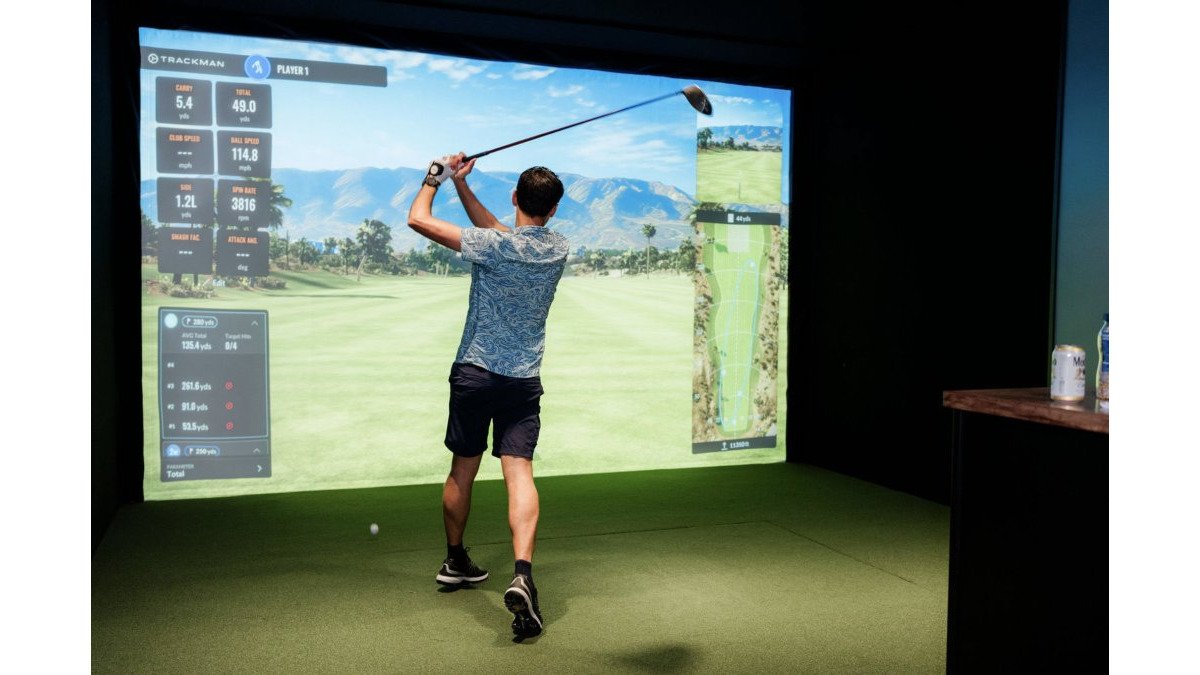
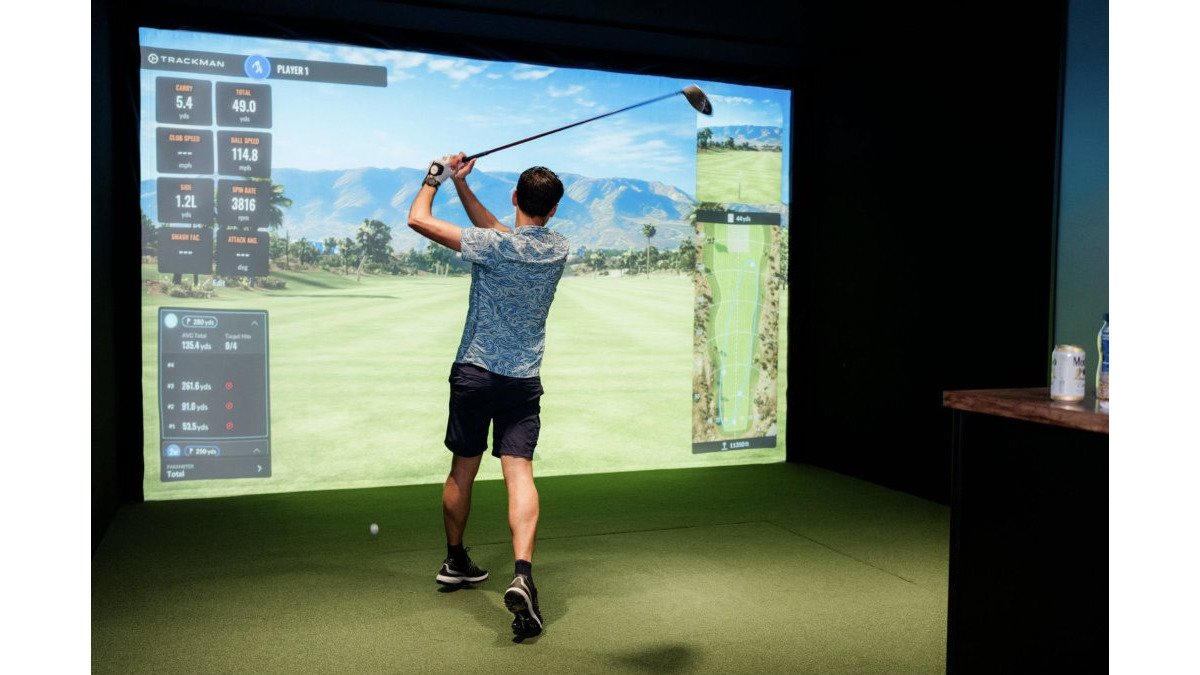
SVN2 Indoor Golf's TrackMan system provides instant feedback after every swing, swing speed, ball speed, carry distance, and trajectory on screen.
This is how you improve. By collecting data, identifying patterns, and making targeted changes. Book an indoor golf simulator session at SVN2 Indoor Golf and experience professional-grade swing speed measurement that translates directly to better performance on the course.
Start Tracking Your Swing Speed at SVN2
The best launch monitor for swing speed is the one you'll actually use consistently. Entry-level radar monitors work for casual tracking. Mid-range systems deliver reliable data for serious practice.
Your swing speed is trainable. With the right feedback and consistent practice, golfers can add 3-5 mph within a few months. That's 10-15 extra yards off the tee.
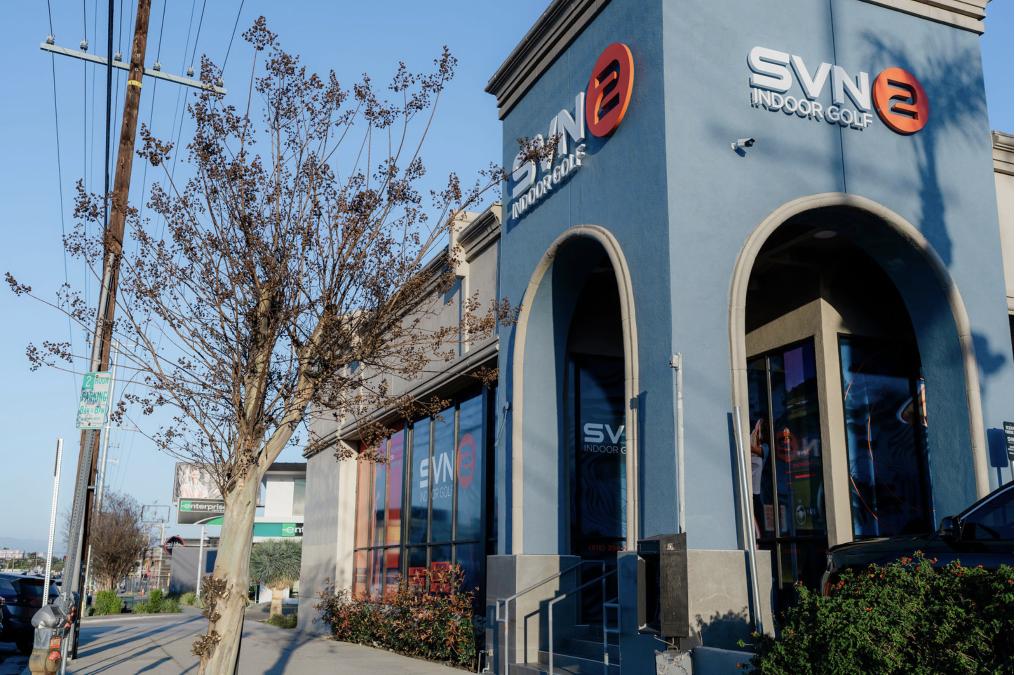
SVN2 Indoor Golf combines state-of-the-art TrackMan simulators with a fully self-service facility designed for focused training. Our pay-as-you-go model means you practice on your schedule.
Frequently Asked Questions
What is the best launch monitor for measuring golf swing speed?
The best launch monitor depends on your budget and needs. Radar-based options like the Swing Caddie SC4 Pro ($499) measure swing speed accurately at a midrange price. For professional-grade data, TrackMan simulators at facilities like SVN2 deliver comprehensive swing speed analysis alongside ball-flight metrics. Budget models under $300 measure swing speed but with less precision than premium options.
Can a launch monitor measure clubhead speed accurately?
Yes. Radar-based launch monitors use Doppler technology to measure clubhead speed directly. Camera-based systems like the Rapsodo MLM2PRO combine radar with video tracking for dual confirmation. At SVN2, TrackMan simulators capture precise clubhead speed data by analyzing the club's motion during your swing, giving you exact measurements for every club in your bag.
What is the difference between a launch monitor and a swing speed radar?
A swing speed radar measures only club velocity. A launch monitor captures swing speed plus ball-flight data: carry distance, spin rate, launch angle, and smash factor. Radar devices are compact and portable; full launch monitors require more space. At SVN2, TrackMan provides complete launch monitor data, showing you both your swing speed and how the ball responds to your stroke.
How can you use launch monitor data to improve swing speed?
Track your swing speed across multiple sessions to establish a baseline, then focus on consistency. Compare swing speeds across different clubs to identify gaps in your progression. Use the feedback to refine your swing mechanics and tempo. At SVN2's facility, you can review your swing speed data after every shot, adjust your approach in real time, and build a detailed record of your improvement over weeks and months.
Stop practicing blind. Start measuring. The difference between a golfer who improves and one who stagnates is data. SVN2 Indoor Golf gives you professional-grade swing speed measurement, instant feedback, and the facility to practice smarter. Book a session today and see exactly how fast you're swinging, and where you can improve.