 Comparison
Indoor vs Outdoor Golf Practice: Which Builds Your Game
Last Updated: November 15, 2026
Quick Summary
Indoor vs outdoor golf practice depends on what you need to work on. Indoor practice at SVN2 offers controlled conditions, repeatable shots and detailed Trackman swing data, while outdoor practice shows real ball flight in real wind and light. Use indoor sessions to build and measure technique, and outdoor practice to test it under real conditions.
- Indoor sessions at SVN2 are unaffected by weather and can be booked on a flexible, pay-as-you-go basis.
- Trackman simulators give swing and ball data for every shot, so you can compare changes between sessions.
- Outdoor practice reproduces real ball flight, wind and lies that simulators cannot fully recreate.
- Short game and putting need real ground and greens, so confirm those shots outdoors.
- Set one measurable goal and hit focused blocks of 10 to 15 shots with a target each time.
Table of Contents
- How Indoor and Outdoor Golf Practice Differ
- Golf Simulator vs Driving Range: Side-by-Side Comparison
- Golf Simulator Accuracy and How Data Compares to Real Ball Flight
- Benefits of Indoor Golf Practice at SVN2
- Short Game, Putting, and Skill Level: Which Setting Fits
- Building a Golf Practice Routine at the SVN2 Facility
- Booking Your First Session at SVN2
- Frequently Asked Questions
How Indoor and Outdoor Golf Practice Differ
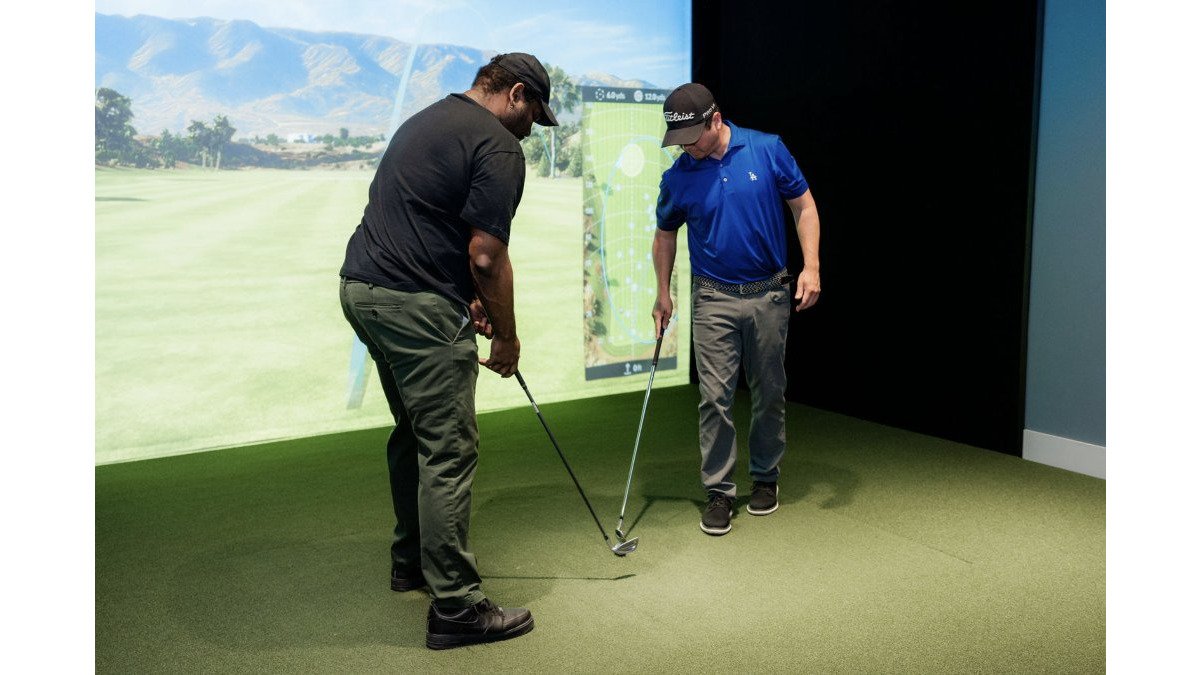
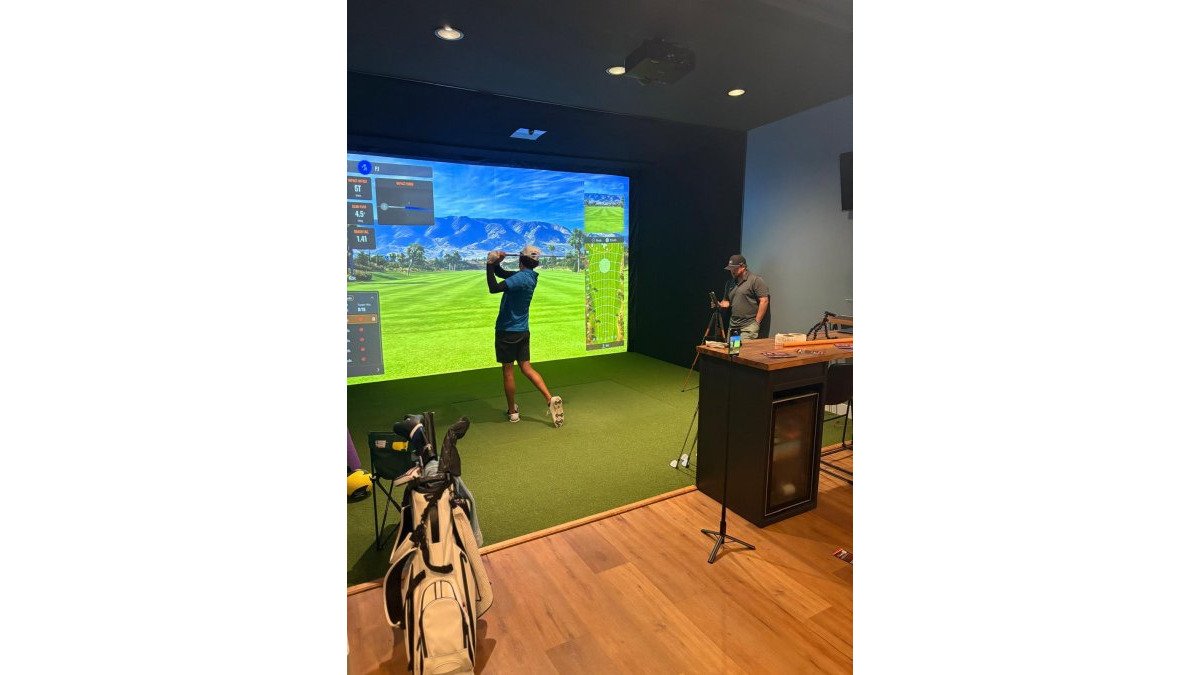
Indoor vs outdoor golf practice is less a contest than a choice about what you need to work on. Indoor practice at SVN2 gives you controlled conditions, repeatable shots and detailed swing data on every ball you hit. Outdoor practice gives you real ball flight in real wind and light, which no simulator fully reproduces.
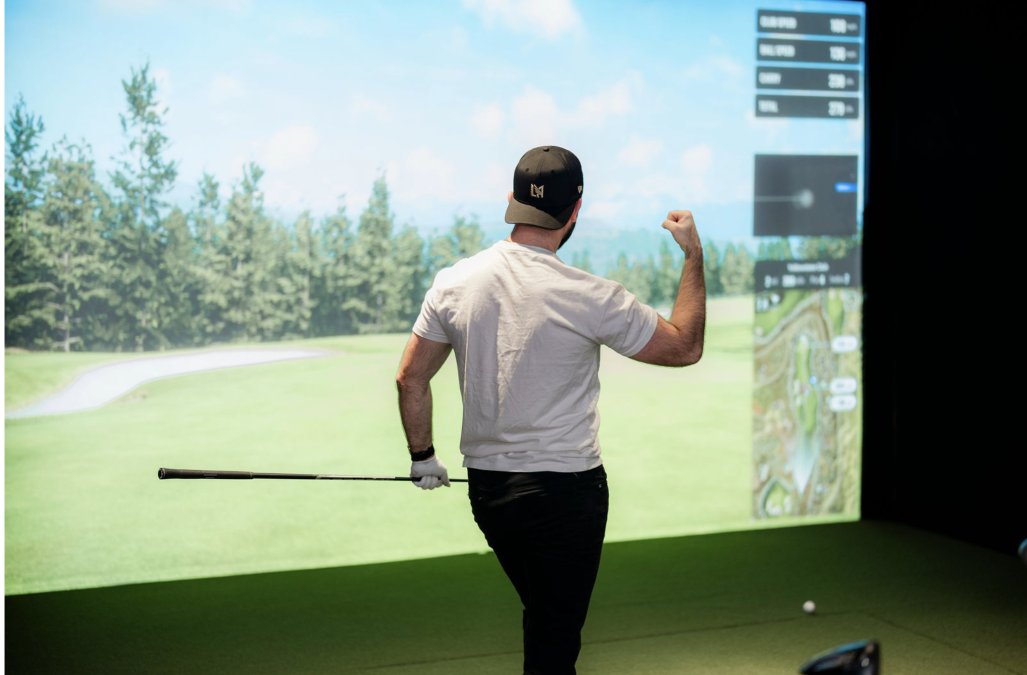
Indoor practice suits technique work and measurable feedback. Outdoor practice suits seeing the ball fly and applying skills in natural conditions. Both have a role, and the rest of this guide shows where each one fits.
The indoor format also removes friction. Weather doesn't cancel a session, and you aren't waiting for a tee time. At SVN2, Trackman simulators provide swing data, so you can see what changed from one shot to the next instead of guessing.
The trade-off is that a simulator controls the environment for you. An outdoor range asks you to adapt to the wind and the lie. Keep that difference in mind as you read the comparisons below.
Golf Simulator vs Driving Range: Side-by-Side Comparison
The clearest way to choose between a simulator and a driving range is to compare them on the factors that affect your practice. The table below summarizes the core differences.
| Factor | Indoor Simulator (SVN2) | Outdoor Driving Range |
|---|---|---|
| Weather | Unaffected | Affected by wind, rain, cold |
| Feedback | Detailed swing and ball data | Ball flight, limited data |
| Conditions | Repeatable and controlled | Variable and natural |
| Scheduling | Pay-as-you-go, flexible | Often tied to range hours |
| Best use | Technique and yardage work | Real ball flight and shot shaping |
Pros of indoor practice at SVN2:
- Consistent conditions, so changes in your swing are easier to isolate
- Trackman data for every shot, including yardage control
- Available any time you have 30 minutes free
Cons of indoor practice:
- The ball does not fly the way it does outdoors
- Simulated feel can differ from a real course
Pros of outdoor practice:
- Real ball flight and real wind effects
- Practice with the conditions you will actually play in
Cons of outdoor practice:
- Weather and daylight limit when you can practice
- Less detailed data on what changed in your swing
Golf Simulator Accuracy and How Data Compares to Real Ball Flight
Golfers often ask how closely simulator numbers match what happens on a course. The ball does not travel exactly as it would outdoors, so treat simulator data as a guide to your technique and yardage control rather than a copy of real flight.
At SVN2, the Trackman simulators give you a detailed breakdown of each swing, and you can compare those numbers from one session to the next. That comparison is where the value sits: you learn which change in your swing produced which change in the ball's behavior.
To get the most from the data, keep your practice consistent. Use the same club, the same target and the same routine for each block of shots. Otherwise the numbers will mostly reflect your variation rather than your progress.
Benefits of Indoor Golf Practice at SVN2
The core benefit of practicing at SVN2 is the chance to practice smarter and improve faster. The Trackman system gives you a clear record of every swing, so each session has a purpose.
Three benefits stand out:
- Zone in on specific yardage. Hit a set of shots with one club and see the distance spread. Adjust your strike or swing until the numbers tighten.
- Analyze your swing mechanics. Detailed swing data helps you review your swing, not just where the ball went.
- Flexible training time. Come in for 30 minutes between meetings, or stay longer when you have time. You set the schedule.
These benefits matter most for golfers who want to change something specific. If your goal is to build a new move or fix a pattern, an indoor session with immediate data gives you quick feedback.
Short Game, Putting, and Skill Level: Which Setting Fits
Most comparisons of indoor and outdoor practice focus on full swings and launch-monitor numbers. Short game and putting get a sentence or two, even though those shots decide most scores. This section closes that gap with practical guidance for SVN2 users, plus a decision guide by skill level.
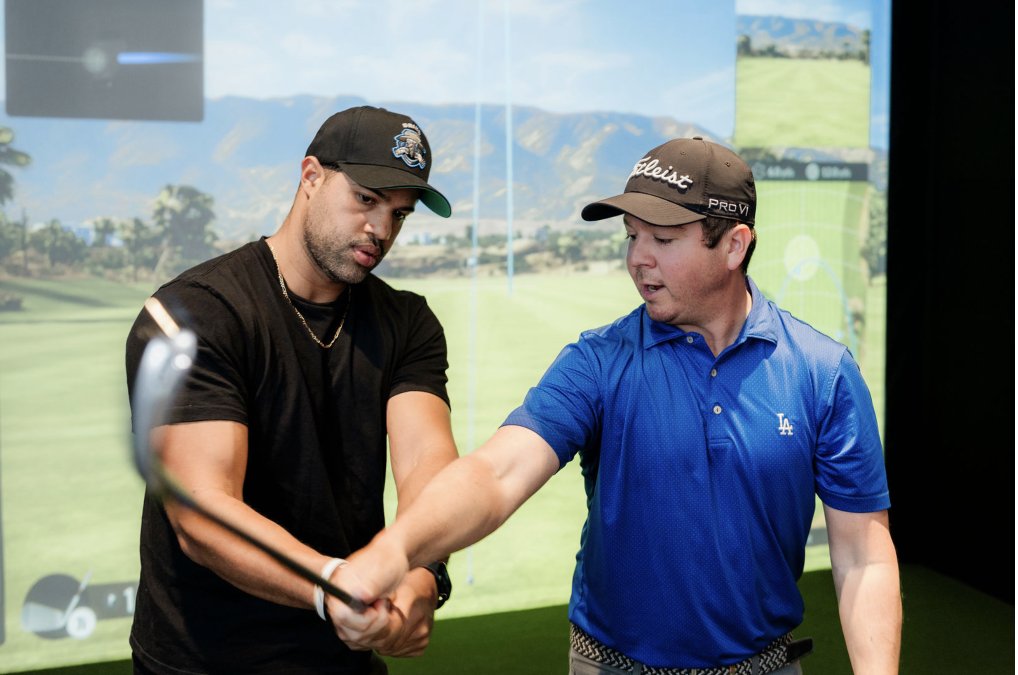
Short game and putting: what each setting actually gives you
At SVN2, the Trackman simulators provide swing and ball data that can be used for yardage work with your scoring clubs.
What the simulator cannot reproduce is the ground interaction that defines short game: the lie, the turf, the bounce of the wedge, and the roll of a putt across real grass. Indoor practice does not reproduce uneven lies, rough or downslope chips. If your short game is the priority, plan to confirm those shots on a real chipping area and practice green.
Putting is the clearest split. It cannot teach you to read a green, judge speed on a slope, or adapt to grain. Take the read-and-speed work to a real green.
A practical split for scoring clubs
- Use SVN2 for wedge yardage work with a fixed target.
- Take chipping, pitching from uneven lies and green reading outdoors, where the surface and slope are real.
Watch out: don't assume a tight wedge dispersion indoors means your short game is sharp. The lie and turf outdoors are the variables that expose a weak short game, so test them before you trust the number.
Which setting fits your skill level
Beginners can use SVN2 early on. The controlled environment gives a relaxed setting, and the swing data gives feedback you can review. You do not need to understand every metric; carry distance and direction are enough to build a repeatable swing.
Experienced players and anyone changing their swing can use SVN2's data to review their swings shot to shot. That is hard to do on a range where wind and lie add noise.
Players working on course management, uneven lies and scoring should spend more time outdoors. The skills that lower scores in real rounds, reading conditions, adapting to lies, managing misses, are learned in the environment where they happen.
A reasonable rule: use SVN2 to build and measure the swing, and use outdoor practice to test it under real conditions.
Building a Golf Practice Routine at the SVN2 Facility
A plan you can follow at SVN2, tied to a goal and built around deliberate practice rather than ball volume, helps make your sessions purposeful. This section gives you a weekly structure and the session-design rules that make indoor work transfer.
Start with a goal, not a bucket
Before your first SVN2 session, write down one measurable goal for the next four weeks. Examples: tighten your 7-iron carry spread to within 8 yards, reduce your left miss with the driver, or build a repeatable 50-yard wedge. A goal gives the Trackman data something to answer.
A four-week plan that uses SVN2 well
- Week 1, baseline. Hit 20 shots with each club in your goal and record the numbers. Do not try to change anything. You need a starting point.
- Week 2, one change. Pick a single swing or setup change and hit focused blocks of 10 to 15 shots, reviewing the data after each block. Change only one thing.
- Week 3, pressure and transfer. Add a target game: hit 10 shots to a specific yardage and score how many land within your goal window. This tests whether the change holds when you care about the result.
- Week 4, retest and compare. Repeat the Week 1 baseline and compare. If the number moved, keep the change; if not, adjust one variable and repeat.
Session design rules that matter
Deliberate practice is about feedback and target selection, not hitting more balls. A few rules can help make SVN2 sessions more purposeful:
- Pick a target every shot. Random hitting with no target produces random results. Choose a specific yardage or fairway window before each block.
- Keep blocks short. Ten to fifteen shots per block, then review the data. Long blocks blur the feedback.
- Change one variable at a time. If you change grip, ball position and tempo together, the data cannot tell you which one worked.
- Use transfer tests. End each session with a scored game that mimics a shot you face on the course, so you practice performing, not just repeating.
- Log the number that improved. Write down one metric per session so you can see progress across weeks.
Avoid treating SVN2 like a bucket of balls. Hitting shots with no target and no review tends not to lead to focused improvement. Shorter, scored sessions with a clear goal are a more purposeful use of your time.
Balancing SVN2 with outdoor practice
A weekly rhythm that works for many golfers: two SVN2 sessions for technique and yardage, and one outdoor session to confirm the changes on real turf and in real wind. The indoor work builds the skill; the outdoor work tests whether it transfers. If you only have time for one session a week, alternate weeks between the two settings so neither skill goes stale.
Booking Your First Session at SVN2
Booking your first session at SVN2 is straightforward. The facility is fully self-service, and you can pay as you go. Community memberships are available for students, faculty, first responders, seniors and veterans.
Before you arrive, decide on one goal for the session. Whether it is yardage control with your irons or a swing change you have been working on, a clear goal makes the data far more useful. Bring the clubs you actually play with.
For current pricing and availability, check the SVN2 Indoor Golf website or contact the facility directly.
If you are weighing equipment options for practicing at home, our guide to choosing the best indoor golf simulator for practice compares the main choices. For the simulator's accuracy, how to read golf simulator data walks through each number on the screen.
Start with one focused session, review what the data shows, and build from there.
Frequently Asked Questions
Is indoor golf practice as effective as outdoor practice?
Indoor practice is effective for technique work and for building repeatable swing mechanics, because conditions stay the same from one swing to the next. Outdoor practice is better for seeing true ball flight in wind and on natural turf. Using both can be a useful approach, with indoor sessions focused on swing changes and data review, and outdoor time used to test those changes under real conditions. At SVN2, the Trackman simulators give you swing and yardage data.
How accurate are golf simulator distances?
Simulator data can be used to spot trends in your distances over time. They do not reproduce every outdoor condition such as wind, elevation, or lie, so treat simulator yardages as a consistent benchmark rather than an exact prediction of what you will see on a course. At SVN2, you can use the Trackman data to review how your yardages change as your swing changes.
What are the advantages of practicing golf indoors?
Indoor practice removes weather as a factor, so you can train on a schedule that fits your day. The controlled setting can make it easier to compare results, and detailed swing data helps you review what changed. SVN2 is fully self-service and pay-as-you-go, so you can book a session when you have 30 minutes or a full hour free, without a club membership commitment.
Should beginners practice golf indoors or outdoors?
Beginners can start indoors in a controlled setting while working on fundamentals such as grip, posture, and tempo. Once the basic motion is consistent, moving some practice outdoors helps build the feel for real ball flight and course conditions. A simple split, with indoor sessions for mechanics and outdoor time for applying them, works well for most new golfers.