 how-to
How to Practice Golf After Work: A Time-Smart Guide
Table of Contents
- Why After-Work Golf Practice Requires a Different Approach
- Building an Efficient Golf Practice Routine That Fits Your Schedule
- TrackMan Golf Practice: Using Data to Accelerate Improvement
- Golf Practice Routine for Beginners: Starting Smart After Work
- Creating a Golf Practice Schedule You'll Actually Follow
- Managing Energy and Avoiding Burnout in Evening Practice
- Warming Up and Preparing Your Body Before Evening Practice
- Frequently Asked Questions
Last Updated: October 12, 2026
Why After-Work Golf Practice Requires a Different Approach
Practicing golf after work is not the same as a weekend session. Your energy is lower, your time is tight, and your body is stiff from sitting all day. Hitting balls for two hours does not work when you have 30 to 90 minutes before the facility closes.
At SVN2 Indoor Golf, the ones who improve fastest are not the ones who practice the most, they practice smarter within the time they actually have.
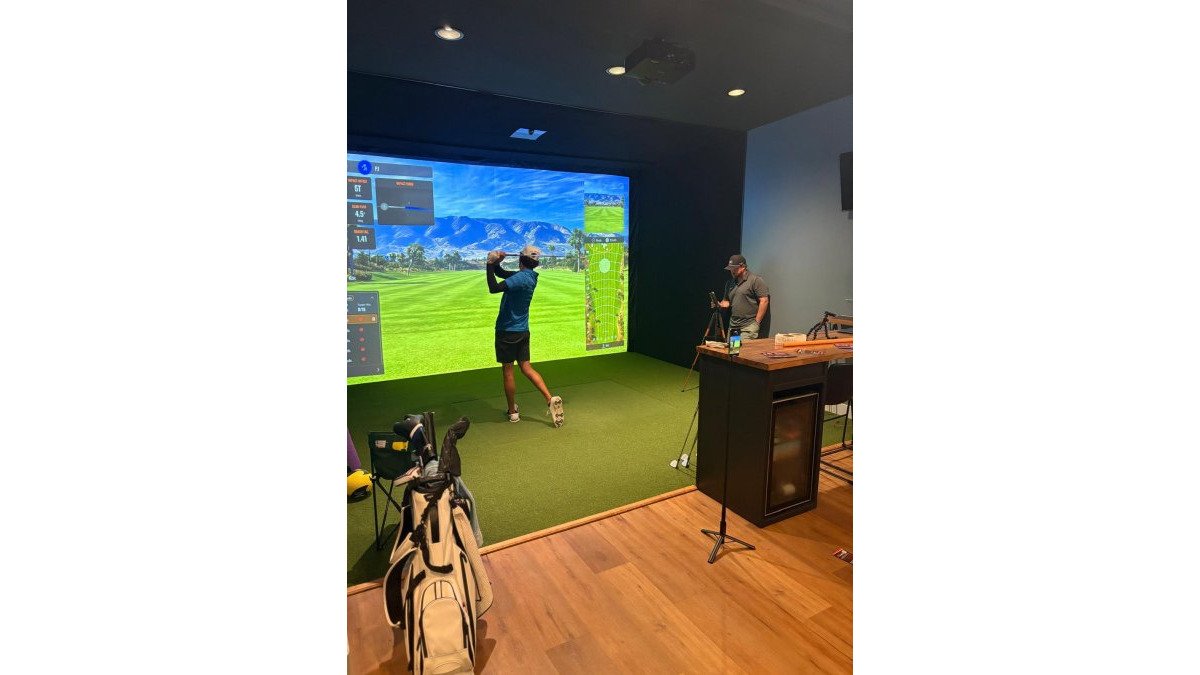
The difference comes down to structure. A focused after-work session at our facility beats an unfocused weekend marathon every time, because our Trackman simulators show you exactly what your swing is doing, no guessing, no wasted reps.
This guide covers how to build an after-work practice golf routine that actually fits your life and moves your game forward.
Building an Efficient Golf Practice Routine That Fits Your Schedule
The key to efficient golf practice is knowing what to do before you walk in: decide your focus, warm up fast, execute with purpose, leave.
Most golfers hit random clubs for random amounts of time. That is not practice. Real practice has a goal, and at SVN2 Indoor Golf our Trackman data gives you instant feedback, ball speed, launch angle, spin rate, and carry distance on every shot. No mystery about whether you are getting better.
Here is what an efficient routine looks like across three common time windows.
The 30-Minute After-Work Session
Thirty minutes is tight, but it is enough to make real progress if you focus.
Warm-up: 5 minutes, dynamic stretches at the bay and a few easy swings.
Main work: 20 minutes, pick ONE club and ONE target, hit 15-20 focused shots, watch the Trackman data after each shot, and adjust.
Cool down: 5 minutes, note what you learned and plan your next session.
The 30-minute session works best for one specific goal: dialing in a single club or shot type. Maybe you want to improve your 7-iron distance control. Maybe you want to work on tempo with your driver. Pick it. Own it. Leave.
The 60-Minute After-Work Session
Sixty minutes gives you room to work on two areas and build a real practice rhythm.
Warm-up: 7 minutes, light mobility work and 5-6 easy swings.
Primary focus: 25 minutes, same structure as the 30-minute session, deeper work on one skill.
Secondary focus: 20 minutes, shift to a different club or shot type, keeping intensity high but controlled.
Wrap-up: 8 minutes, review Trackman data from both blocks and write down one key insight.
The 60-minute window is where real skill development happens. You have time to warm up properly. You can work through some fatigue. You can see patterns in your swing across multiple clubs.
The 90-Minute After-Work Session
Ninety minutes is your sweet spot for a complete practice golf routine after work. You can address multiple areas without rushing.
Warm-up: 10 minutes, full mobility routine and gradual swing build-up.
Block 1, Technical work: 30 minutes, one specific swing element, measured with Trackman data, with small adjustments tested.
Block 2, Shot variety: 30 minutes, different clubs, shot shapes, and distances to build confidence across your bag.
Block 3, Game simulation: 15 minutes, play a few holes on the simulator like a real round, focused on course management.
Cool down: 5 minutes, log your session and set a goal for next time.
The 90-minute session lets you practice golf after work the way you would on a full day off. You warm up completely. You work on technique. You practice variety. You finish with something that feels like real golf.
TrackMan Golf Practice: Using Data to Accelerate Improvement
TrackMan simulators are not just for fun, they are the fastest way to improve your golf swing if you know how to use the data.
Every shot you hit at SVN2 Indoor Golf gives you precise measurements: ball speed, launch angle, spin rate, carry distance, descent angle, and smash factor. Most golfers ignore this data and move on, which is a missed opportunity. Used intentionally, it turns practice into deliberate practice, you see exactly what is working and what is not, and the numbers tell you whether your changes made a difference.
Here is how to use TrackMan data in your after-work sessions:
- Establish a baseline. Hit 10 shots with a club you know well. Write down the average carry distance, launch angle, and spin rate. This is your starting point.
- Make one small change. Adjust your grip, stance, or swing thought. Hit 5 more shots.
- Compare the data. Did the change help or hurt? The Trackman numbers show you instantly.
- Keep what works. Discard what does not. Move to the next adjustment.
This process turns every session into real feedback. You are not practicing the same mistakes over and over. You are fixing them.
Golf Practice Routine for Beginners: Starting Smart After Work
If you are new to golf, after-work practice can feel overwhelming: you do not know what to work on, whether you are doing it right, or how to fit it in before the facility closes.
The fix is to treat practice as a progression with checkpoints. At SVN2 Indoor Golf, the simulator gives you a number for almost everything, so a beginner can measure progress instead of guessing.
Here is a six-week progression built for 45-minute after-work sessions at the facility. Each phase has one job and one measurable checkpoint.
Weeks 1-2: Build a repeatable setup. Your only goal is the same grip, posture, and alignment on every shot. Hit 25-30 shots with a 7-iron and do not chase distance. Watch two simulator numbers: smash factor and carry distance spread.
Weeks 3-4: Add one club and one target. Introduce a 9-iron or pitching wedge and pick a single target on the simulator screen for every shot.
Weeks 5-6: Introduce tempo and a pre-shot routine. Slow your swing to roughly 70% effort and focus on rhythm rather than speed, using the simulator's tempo or club speed readout to confirm you are swinging easier.
Week 7 and beyond: Transfer to the course. Play three or four holes on the simulator at the end of each session, treating every shot like it counts. This is where beginners learn course management.
The key is patience. Pick one thing, get good at it, move to the next.
Creating a Golf Practice Schedule You'll Actually Follow
The best practice routine is the one you actually do. Most after-work practice guides skip the part that determines whether you show up: logistics. Before you build a schedule, answer four questions about your facility.
1. What are the closing hours, and what is the latest realistic start time? Work backward from closing time, not forward from when you leave the office.
2. How long is the drive, and does it fit a 30-minute window? If the round trip is 40 minutes, a 30-minute session is really a 70-minute commitment.
**3.
4. Can you book a bay in advance? A reserved bay turns practice from a maybe into an appointment. If you can lock in a recurring slot, do it.
Once those four questions are answered, build the schedule itself.
Step 1: Pick two fixed slots, not five flexible ones. Two sessions per week is better than five sessions you will miss. Put them on the calendar like meetings.
Step 2: Assign one focus per slot. Session A: long game (driver, fairway woods, long irons). Session B: short game and putting.
Step 5: Review and adjust every four weeks. If a time slot is not working, move it. If a focus area is not producing better numbers, change the drill or the club.
Managing Energy and Avoiding Burnout in Evening Practice
After-work practice is hard: you are tired, stiff, and mentally full. Pushing through and grinding leads to poor practice quality and burnout. Work with your energy, not against it.
Warm up more than you think you need to. Spend 10 minutes on mobility and easy swings. Your body needs time to transition from work mode to golf mode, this is essential time, not wasted time.
Practice your best skill first. Hit your best shots while your energy is high. This builds confidence and momentum.
Take real breaks. After 20-25 minutes of focused work, step away for a minute, grab water, and let your mind reset.
Know when to stop. If your swing feels off after 60 minutes, do not force another 30. Leave wanting more, not exhausted.
Track how you feel, not just how you hit. After each session, note your energy level and focus. Over time, you will learn how much practice you can handle without burning out.
Warming Up and Preparing Your Body Before Evening Practice
Your body is different at 6 p.m. than it is at 9 a.m. You have been sitting. Your muscles are tight. Your mobility is reduced.
A proper warm-up before practice golf after work is not optional. It is the foundation of good practice.

Spend 10 minutes on this before you touch a club:
Mobility work (5 minutes):
- Arm circles and shoulder rolls
- Hip rotations and leg swings
- Spinal twists and side bends
- Cat-cow stretches
Swing build-up (5 minutes):
- 5 easy swings with no ball
- 5 swings at 50% effort
- 5 swings at 75% effort
This 10-minute warm-up completely changes the quality of your practice: your swing feels better, your body moves better, and you avoid injury.
After-work golf practice is possible. The key is structure, focus, and using the right tools to measure your progress. At SVN2 Indoor Golf, we have built our entire facility around helping busy golfers like you practice smarter in the time you actually have. Our Trackman simulators give you the data you need to see real improvement, and our flexible, pay-as-you-go model fits your schedule. Book a session and experience how focused practice in a professional facility can accelerate your game.
Frequently Asked Questions
How can TrackMan data help me improve my golf practice after work?
TrackMan simulators capture precise metrics on every swing: ball speed, launch angle, spin rate, and shot dispersion. This data shows exactly where your swing breaks down, eliminating guesswork. Instead of hitting 50 balls and hoping something sticks, you can identify one specific flaw, work on it for 20 minutes, and see the data change in real time. For after-work practice with limited time, this feedback loop compresses months of improvement into weeks.
What should I work on during a short 30-minute after-work golf practice session?
Focus on one skill: wedge shots, putting, or a specific swing fault. Spend 5 minutes warming up, 20 minutes on your single priority using TrackMan feedback to measure progress, and 5 minutes cooling down. Deliberate practice on one element beats scattered work across multiple skills. If your data shows inconsistent contact on 80-yard shots, that's your session. Narrow focus = measurable improvement even in short time windows.
How often should I practice golf after work to actually improve?
Consistency matters more than length. Regular practice can help sustain your current level and contribute to skill development, especially when combined with TrackMan feedback.
Is an after-work golf practice session better than just playing a round?
Practice sessions let you repeat the same shot, track your data, and refine mechanics. A round is valuable for course management and shot selection. You can combine both: use after-work practice to sharpen specific skills, then apply them during weekend rounds.